
2026 DOE Commercial Water Heater Efficiency Standards: What Property Managers Need to Know
Understanding the 2026 DOE Commercial Water Heater Efficiency Standards
As a property or facility manager, staying ahead of regulatory changes is crucial for maintaining operational efficiency and controlling costs in commercial buildings. The U.S. Department of Energy (DOE) has finalized new energy conservation standards for commercial water heating equipment, effective October 6, 2026. These updates target gas-fired models, requiring significantly higher efficiency levels that demand condensing technology—but they do not ban gas water heaters outright.
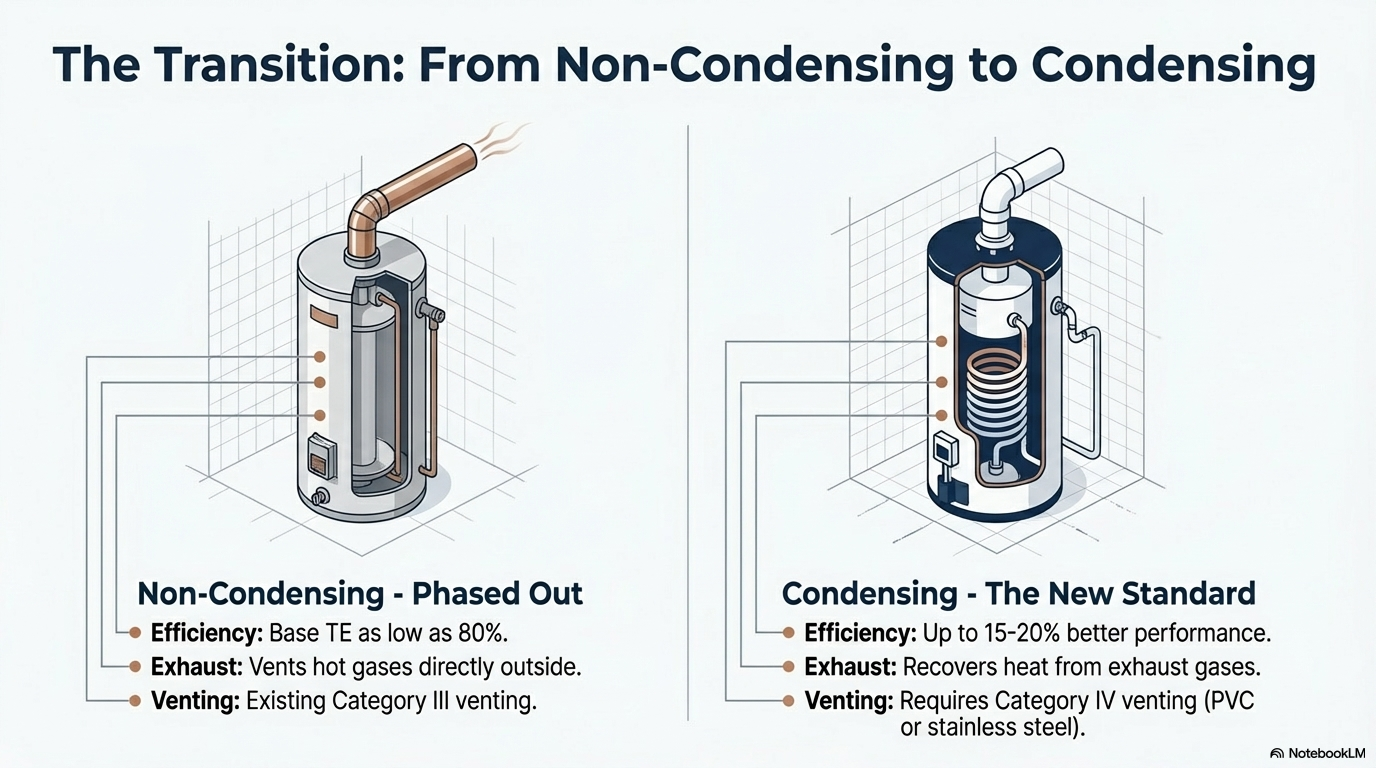
This means that any commercial gas water heater manufactured or imported after this date must meet or exceed a minimum thermal efficiency (TE) of 95% for storage models and 96% for instantaneous (tankless) models. Standby loss limits for storage units will also tighten, calculated as Max SL = 0.86×[(Q/800)+(110 x √Vr)] Btu/h, where Q is rated input and Vr is rated storage volume. For residential-duty commercial gas storage water heaters (often used in lighter commercial settings like small offices or apartments), the new Uniform Energy Factor (UEF) minimum is 0.9297, again necessitating condensing tech. Commercial electric tank models see no changes.
What This Means for Property and Facility Managers
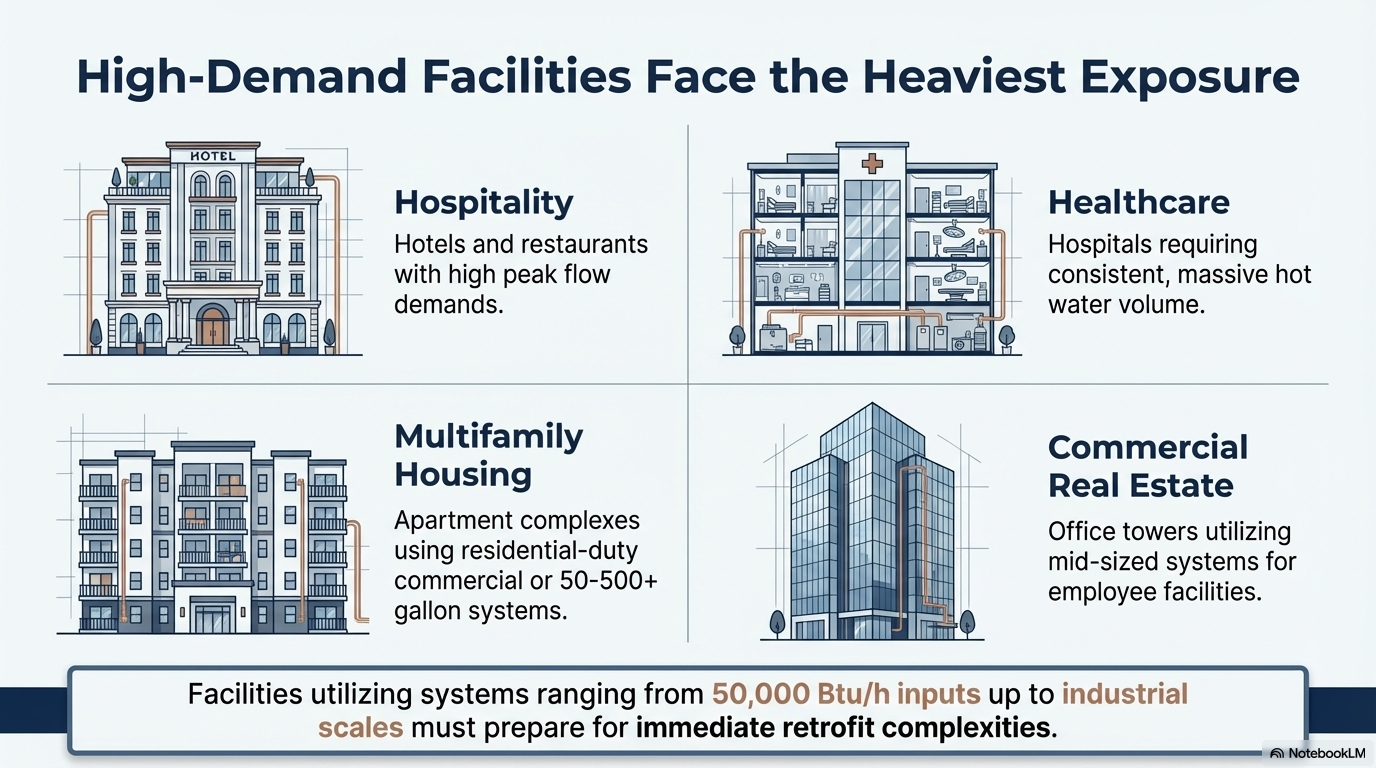
For building owners managing hotels, restaurants, multifamily housing, office towers, or hospitals—any facility with high hot water demands—these standards signal a shift toward more efficient, but potentially costlier, equipment. Non-condensing gas models (current TE as low as 80%) will no longer be produced post-2026, forcing a pivot to condensing units that recover heat from exhaust gases for up to 15-20% better performance.
Key implications include:
- Supply chain disruptions: Pre-2026 inventory will dwindle, limiting options for replacements in buildings with 50-500+ gallon systems common in mid-sized commercial properties.
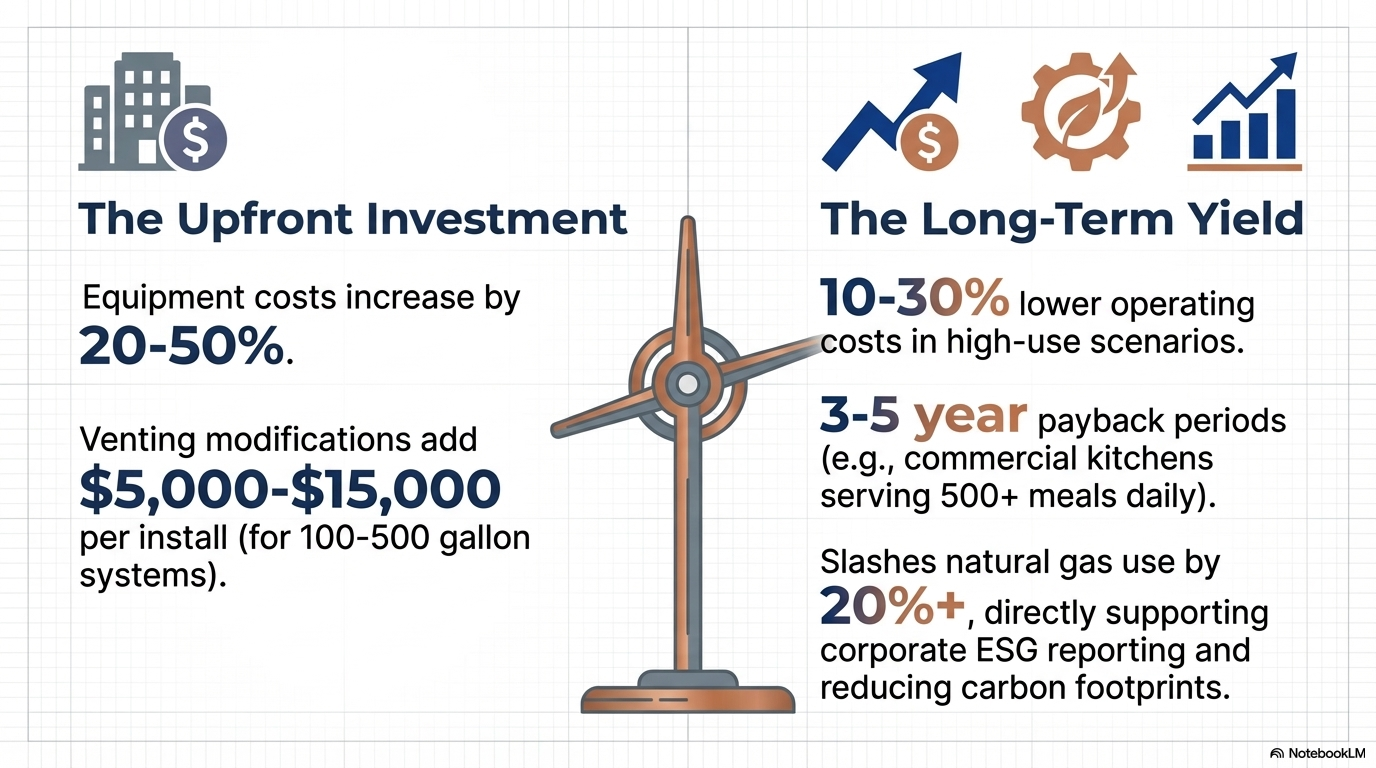
- Higher upfront costs: Condensing models cost 20-50% more due to advanced heat exchangers and venting needs, but they offer long-term energy savings—potentially 10-30% lower operating costs in high-use scenarios like hospitality or healthcare facilities.
- Installation changes: These units require Category IV venting (PVC or stainless steel) and possibly larger footprints, impacting retrofits in older buildings with existing Category III venting.
- No impact on electrics: If your portfolio includes electric tankless or storage (UEF 0.80 unchanged), you're unaffected—but gas dominates 70%+ of commercial installs.
New construction projects starting after mid-2026 will feel the pinch most acutely, as compliant equipment becomes the only option. For existing properties, unplanned failures could mean rushed, expensive upgrades during peak seasons.
Specific Equipment Types and Building Applications Affected
The rules cover a broad range:
- Gas storage water heaters: Rated inputs above 12 kW, storage volumes from 2+ gallons—ideal for laundries, kitchens in restaurants, or employee showers in office buildings.
- Gas instantaneous (tankless): High-flow demands in hotels or gyms, now at 96% TE.
- Residential-duty commercial: ≤58.6 kW input, ≤2 gal storage—common in small multifamily or light commercial like boutique offices.
Hot water supply boilers and unfired storage tanks face standby loss tweaks but remain viable for larger systems (e.g., 1000+ gallon campuses). Tonnage isn't directly applicable here (that's chillers), but think in terms of input ratings: systems from 50,000 Btu/h up to industrial scales.
Practical Action Items for Compliance
With only months until the deadline (as of early 2026), proactive planning is essential. Ferguson Commercial and manufacturers like A.O. Smith and State urge immediate steps:
- Conduct an audit: Inventory all water heaters in your portfolio, noting model, age, efficiency ratings, and venting types. Prioritize high-demand buildings like hotels (200+ rooms) or hospitals.
- Budget for upgrades: Factor in 20-50% higher equipment costs plus $5,000-$15,000 per install for venting mods in 100-500 gallon systems.
- Secure inventory now: Purchase non-condensing backups from existing stock for emergencies—availability drops post-summer 2026.
- Design for condensing: Spec new projects with PVC venting runs and condensate drains to future-proof.
- Explore incentives: Check ENERGY STAR rebates or local utility programs covering 10-30% of condensing unit costs.
- Partner early: Engage contractors versed in DOE compliance for pilot installs to test performance in your building types.
Early movers avoid the scramble, potentially locking in better pricing and lead times (6-12 months for large units).
Why Act Now? Long-Term Wins for Your Portfolio
Beyond compliance, these standards align with rising energy costs and ESG goals. Condensing heaters slash natural gas use by 20%+, reducing carbon footprints for sustainability reports—vital for institutional investors in office or multifamily assets. Payback periods? Often 3-5 years in high-usage spots like commercial kitchens serving 500+ meals daily.
Delay risks premium pricing, downtime, and non-compliant installs that fail inspections.
Find Qualified Commercial HVAC Contractors Today
Don't navigate this alone. Visit My HVAC Tech, the premier commercial HVAC marketplace for property and facility managers. Connect with pre-vetted contractors experienced in DOE-compliant water heater installs. Search now to schedule audits and quotes—secure your compliance edge before October 2026.
Originally sourced from Ferguson