
Commercial HVAC Price Increases March 2026: What Property & Facility Managers Need to Know Now
Commercial HVAC Price Increases Hit in March 2026: Impacts for Property and Facility Managers
As a property or facility manager overseeing office towers, retail centers, warehouses, or multi-tenant buildings, you're no stranger to rising operational costs. The latest wave of HVAC price increases effective March 2026 from key manufacturers like Daikin, Goodman, Amana, and others demands immediate attention. These adjustments—ranging from 3% to 11% on core equipment, parts, ductless systems, VRV, and light commercial products—could add thousands to your capital budgets for systems serving 5-50 ton units common in mid-sized commercial properties.
Copper-intensive components and IAQ (Indoor Air Quality) products face even steeper hikes up to 15%, driven by persistent supply chain disruptions, volatile material costs like copper, and manufacturing pressures. For building owners, this translates to higher expenses for routine replacements, emergency repairs, or upgrades in high-traffic spaces like shopping malls or corporate headquarters.
Key Manufacturers and Price Hikes: Breakdown by Product Type
Here's a detailed look at the announced increases, focusing on categories relevant to commercial applications such as rooftop units (RTUs), split systems for 10-30 ton capacities, and ductless/VRV setups ideal for tenant improvements in office parks:
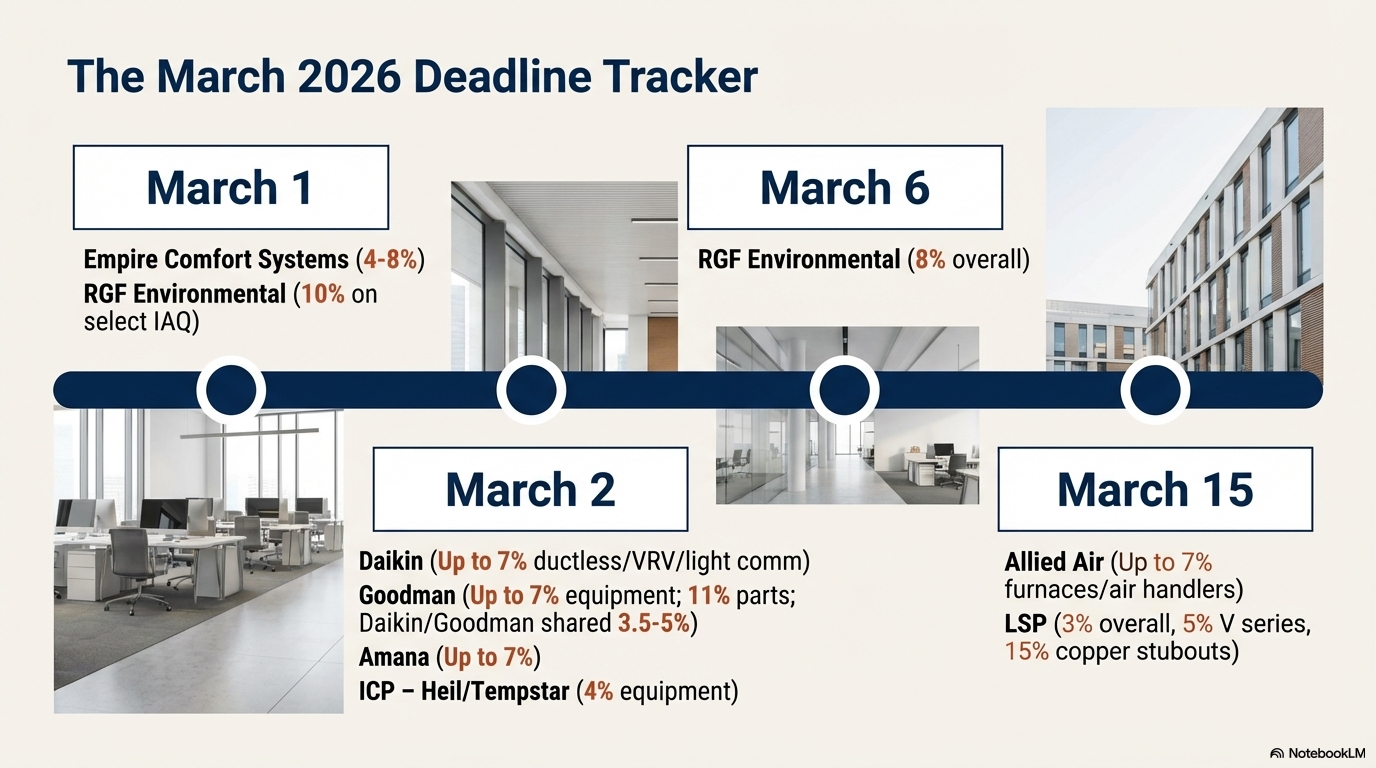
- Daikin: Up to 7% on ductless, VRV, and light commercial products effective March 2. Impacts variable refrigerant volume (VRV) systems popular in hotels and retail strips (typically 3-20 ton equivalents).
- Goodman: Up to 7% on equipment effective March 2; Goodman/Daikin equipment 3.5-5%, parts up 11%. Affects packaged units and split systems for small to mid-sized commercial buildings like strip malls (5-25 tons).
- Amana: Up to 7% effective March 2, hitting similar light commercial equipment.
- ICP (Heil/Tempstar): 4% on equipment effective March 2, relevant for rooftop and split systems in distribution centers.
- Allied Air: Up to 7% effective March 15, covering furnaces and air handlers for warehouse and light industrial spaces.
- LSP: 3% overall, 5% on V series, 15% on copper stubouts effective March 15—critical for copper-heavy piping in larger 30+ ton chillers.
- Empire Comfort Systems: 4-8% effective March 1; RGF Environmental: 10% on select IAQ products March 1, 8% overall March 6. IAQ upgrades for compliance in healthcare facilities or schools now cost more.
- Others like Viessmann (3-5%), Metal-Fab (4%), and Air King (up to 7%) round out increases on registers, grilles, and exhaust fans used in ventilation for office buildings.
These changes, reported by industry sources like Boykin Air, reflect a trend continuing from 2025, with projections of additional 5-10% rises due to tariffs and inflation.
What This Means for Your Commercial Portfolio
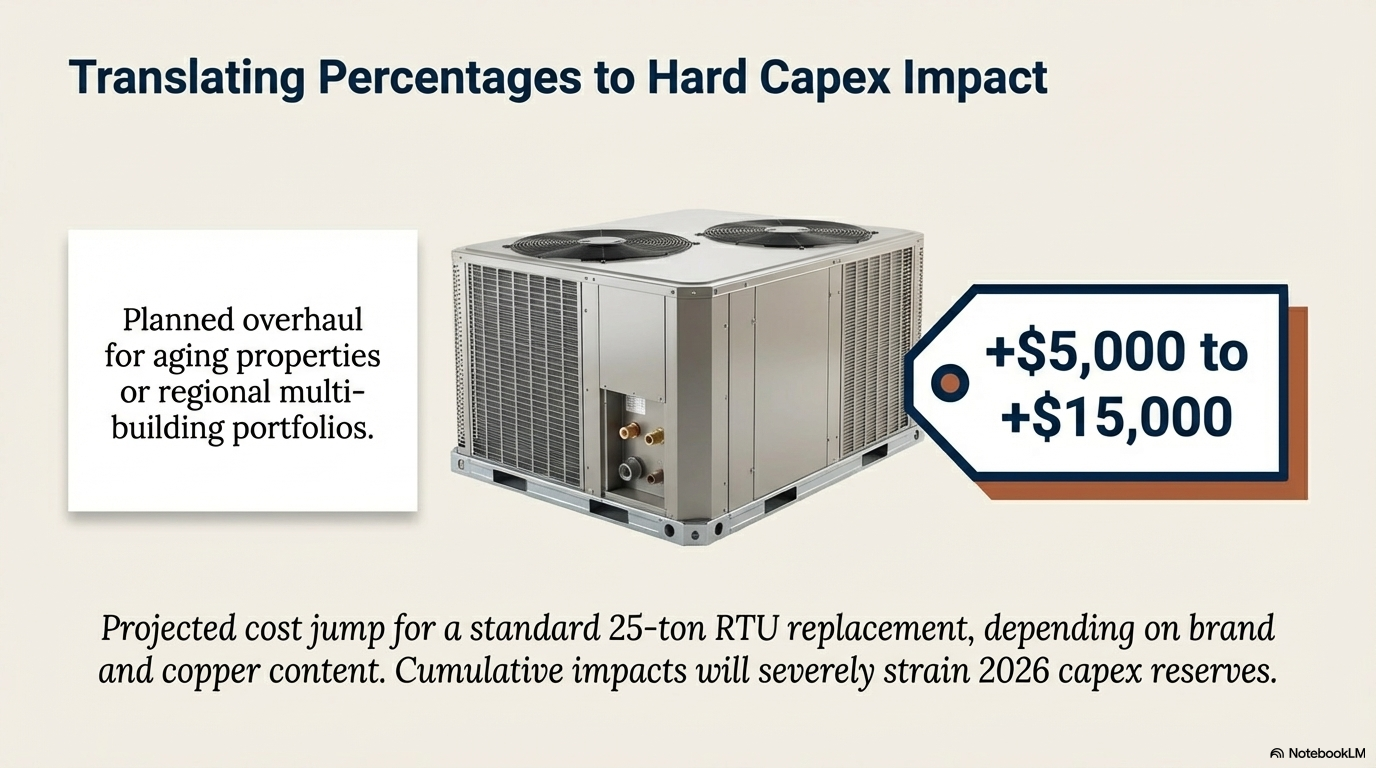
For facility managers budgeting for 2026, expect a 3-11% uplift on new installations or part replacements, compounding if you're planning major overhauls in aging properties. A 25-ton RTU replacement, for instance, could jump $5,000-$15,000 depending on the brand and copper content. In multi-building portfolios—think regional office parks or big-box retail—cumulative impacts could strain capex reserves.
Supply chain pressures mean longer lead times for high-demand items like Daikin VRV systems, potentially delaying tenant fit-outs or seasonal startups. IAQ products, essential for post-pandemic ventilation standards in commercial spaces, face 10-15% spikes, pressuring compliance budgets for LEED-certified or code-upgraded buildings.
Energy efficiency goals? Newer, pricier units may still offer ROI through lower operating costs, but timing matters—delaying could mean paying peak summer premiums amid tight contractor availability.
Practical Action Items: Protect Your Budget Now
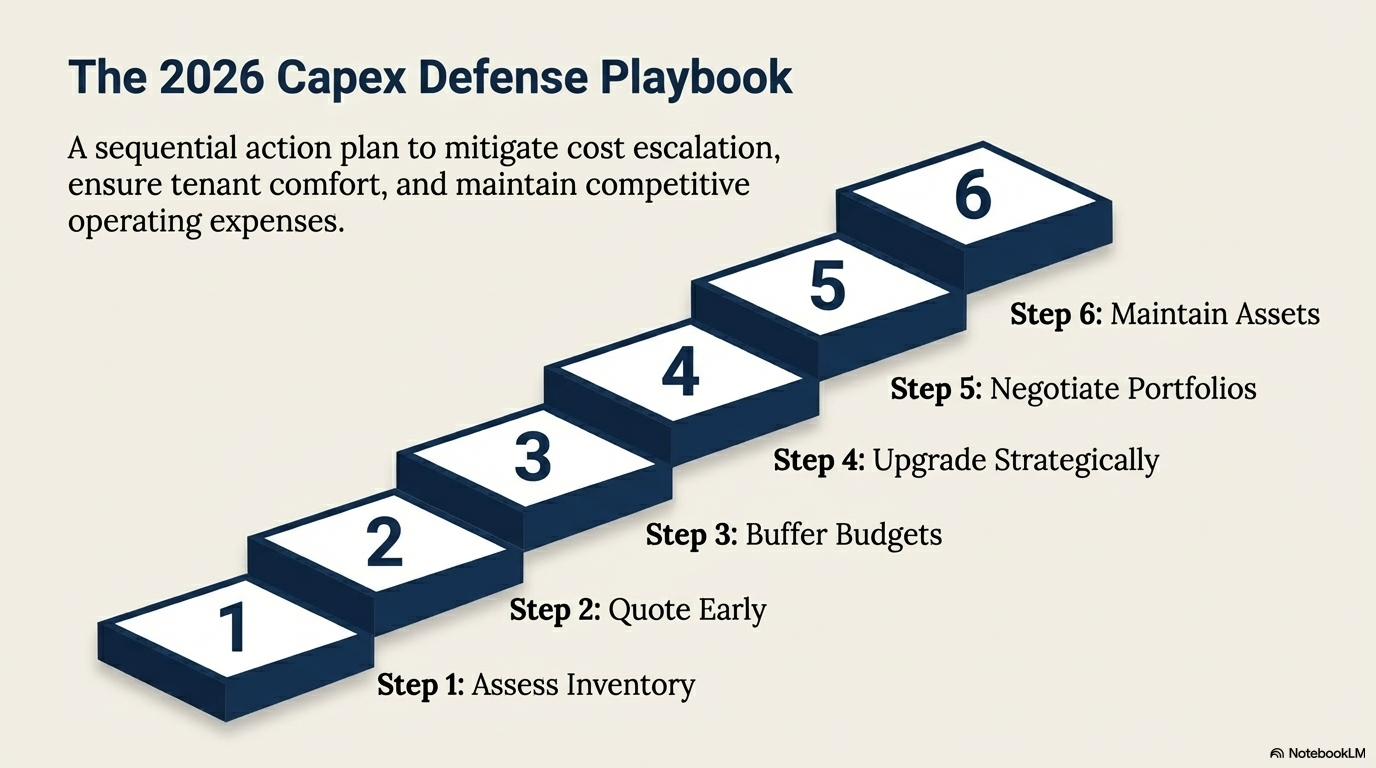
Don't let these hikes catch you off-guard. Here's a step-by-step plan tailored for property and facility managers:
- Inventory Assessments: Audit existing systems immediately. Prioritize units over 10-15 years old or those serving 10+ ton loads in high-use areas like data centers or grocery stores.
- Quote Early: Secure bids before March 2-15 effective dates. Lock in pricing for equipment like Goodman splits or Daikin ductless for Q2 projects.
- Budget Adjustments: Factor 8-12% buffers into 2026 capex for copper/IAQ-heavy scopes. Compare vs. repair costs—replacements often pay off faster with efficiency gains.
- Strategic Upgrades: Target high-efficiency models (e.g., VRV for variable occupancy buildings) to offset hikes via rebates. Plan for 5-50 ton ranges in phased rollouts.
- Supplier Negotiations: Leverage volume purchasing across your portfolio for discounts. Explore financing to spread costs over 3-5 years.
- Preventive Maintenance: Ramp up PM to extend life of current assets, buying time before inevitable replacements.
Stay Ahead of the Curve in 2026
These March 2026 HVAC price increases underscore the need for proactive capital planning in commercial real estate. By acting swiftly, property managers can mitigate cost escalation, ensure tenant comfort, and maintain competitive operating expenses.
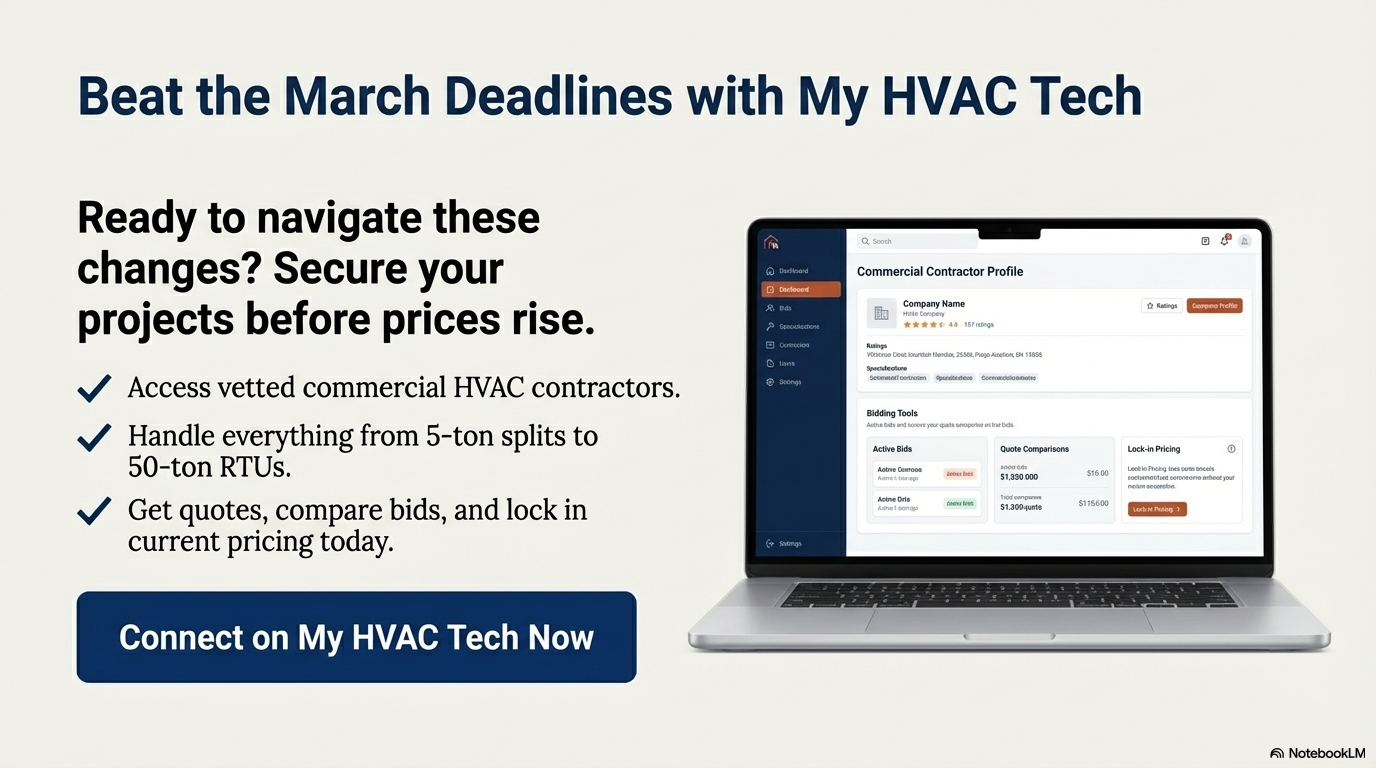
Ready to navigate these changes? Find qualified commercial HVAC contractors on My HVAC Tech today—your marketplace for vetted pros handling everything from 5-ton splits to 50-ton RTUs. Connect now to get quotes, compare bids, and secure your projects before prices rise.
Originally sourced from Boykin Air