

METUS 2026 Commercial HVAC Market Outlook: R-410A Phaseout and Trends Property Managers Must Know
What the METUS 2026 Commercial HVAC Outlook Means for Property and Facility Managers
The commercial HVAC landscape is undergoing a seismic shift as outlined in the latest 2026 market outlook from Mitsubishi Electric Trane HVAC US (METUS). For property managers and facility managers overseeing office towers, retail centers, hotels, and multi-tenant buildings, this report signals urgent action on refrigerant phaseouts, innovative system designs, and electrification trends. With the R-410A phaseout hitting commercial VRF equipment on January 1, 2026, building owners must prioritize compliance to sidestep costly retrofits and operational disruptions.
The R-410A Phaseout: A Ticking Clock for Your HVAC Assets
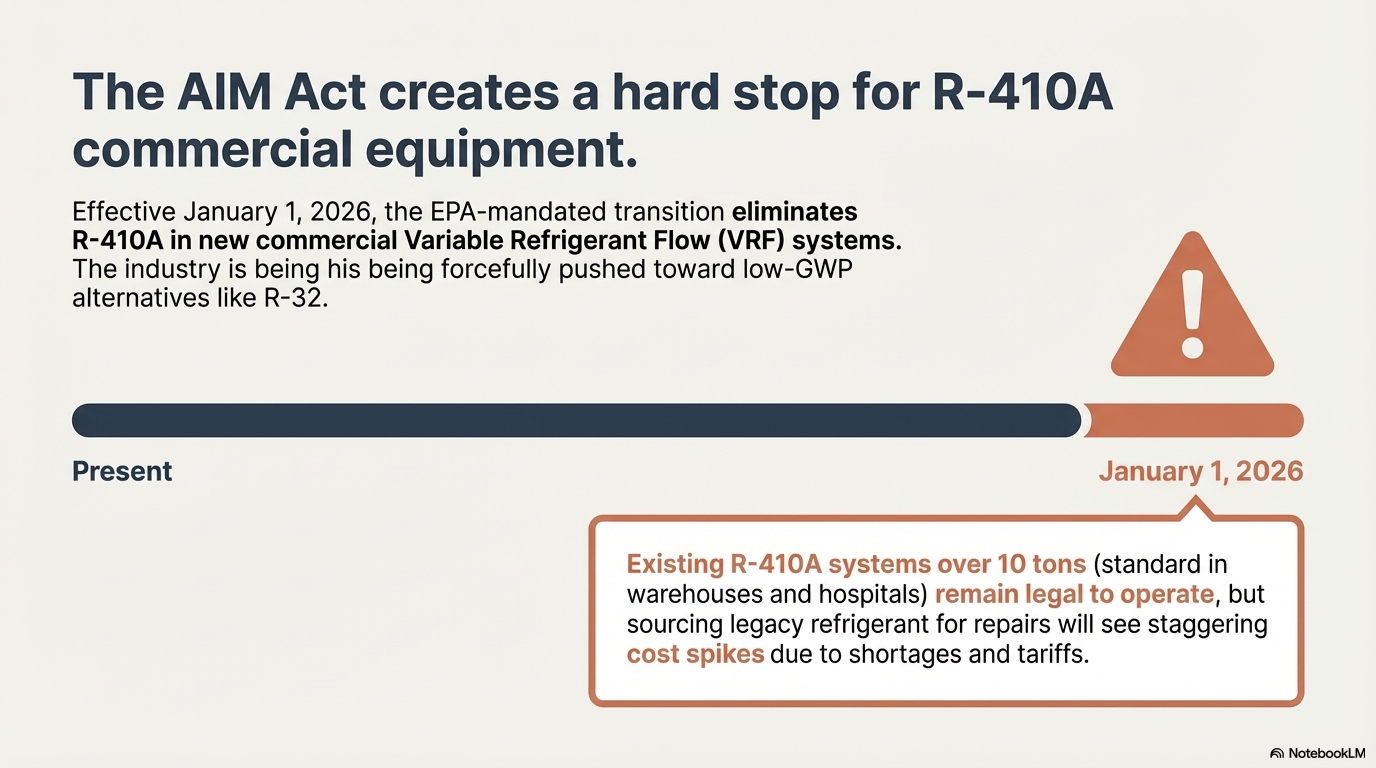
Effective January 1, 2026, the EPA-mandated transition under the AIM Act eliminates R-410A in new commercial VRF systems, pushing the industry toward low-GWP alternatives like R-32. This isn't just a manufacturer issue—it's a direct impact on your bottom line. Existing R-410A systems in buildings over 10 tons (common in mid-to-large commercial spaces like warehouses and hospitals) can still operate, but sourcing refrigerant for repairs will skyrocket in cost due to shortages and tariffs.
What does this mean for you? Replacement demand is spiking as regulations force decisions on aging equipment. As of July 2025, A2L refrigerants like R-32 already dominate 86% of unitary sell-through, leaving R-410A at just 14%. For facility managers, this translates to higher maintenance budgets if you delay. Buildings with VRF systems in the 5-50 ton range—think shopping malls or office complexes—face the biggest risk of non-compliance fines or forced shutdowns.
- Audit your systems now: Inventory all VRF and unitary equipment over 5 tons rated by refrigerant type.
- Budget for transitions: Factor in 20-30% higher refrigerant costs and plan replacements for units pre-2020.
- Seek rebates: Utility incentives for low-GWP upgrades can offset upfront costs in states like California and New York.
Personalized Comfort: VRF and Hybrid VRF as the New Standard
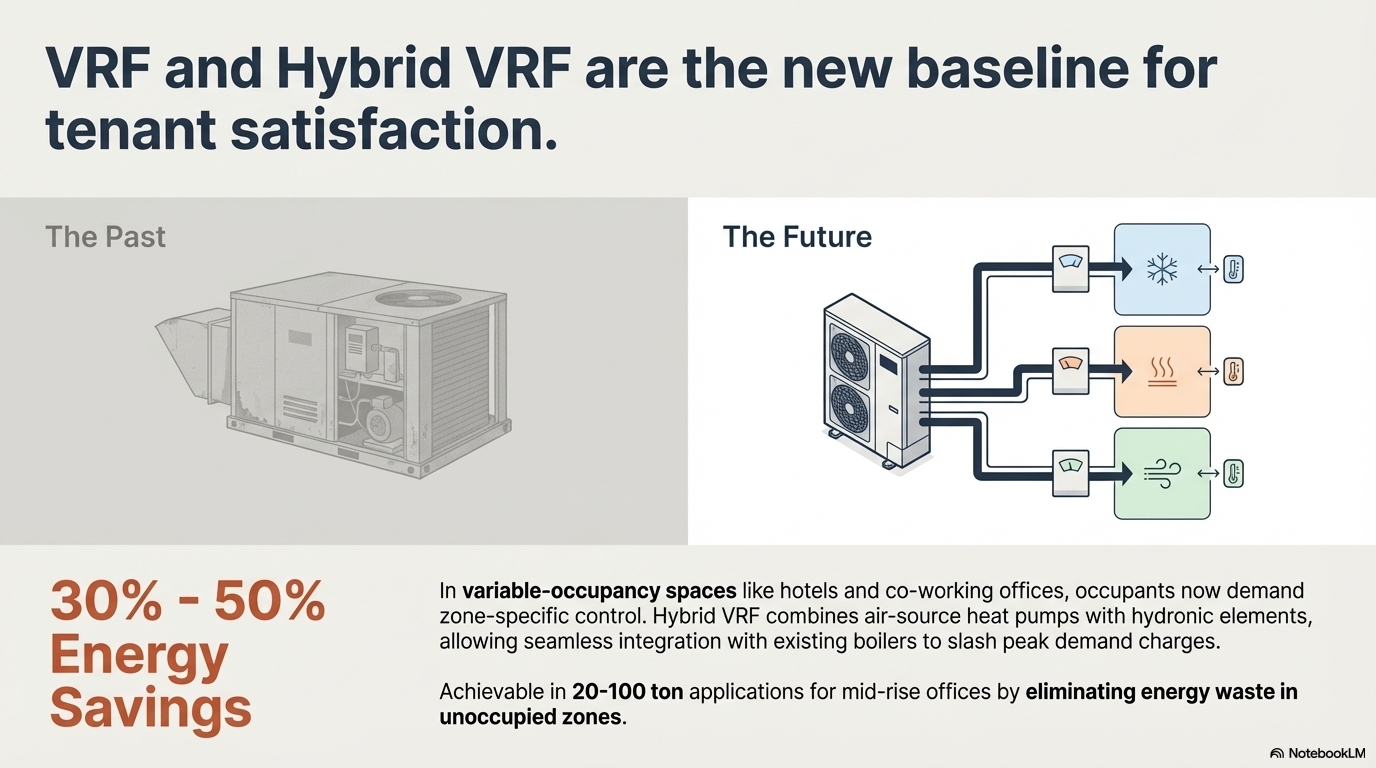
METUS emphasizes personalized comfort via VRF and Hybrid VRF systems as a 2026 cornerstone. These multi-zone solutions allow individualized temperature control in tenant spaces, reducing energy waste in variable-occupancy buildings like hotels and co-working offices. Hybrid VRF combines air-source heat pumps with hydronic elements, offering seamless integration with existing boilers.
For property managers, this means enhanced tenant satisfaction and lease retention. In a post-pandemic world, occupants demand zone-specific control—VRF delivers 30-50% energy savings in 20-100 ton applications for mid-rise offices. Facility managers should evaluate retrofits for buildings with outdated single-zone RTUs, where Hybrid VRF can slash peak demand charges.
Electrification Surge: Heat Pumps Challenge Traditional Boilers
Electrification is no longer emerging—it's mainstream. Electric hydronic heat pumps are competing head-on with gas boilers, especially in new constructions and retrofits for schools, hospitals, and retail strips. METUS highlights all-electric, low-GWP product lines designed for regulatory compliance, with R-32 VRF heat pumps leading the charge.
Building owners benefit from lower operating costs (up to 40% savings vs. boilers in mild climates) and decarbonization credits. However, overstocking and refrigerant changes may challenge the first half of 2026, with market normalization expected later. For facilities in the 50-200 ton range, dual-fuel hybrids provide a bridge, mitigating electrification slowdowns from tariffs or rebate cuts.
Navigating Challenges: Costs, Training, and Market Realities
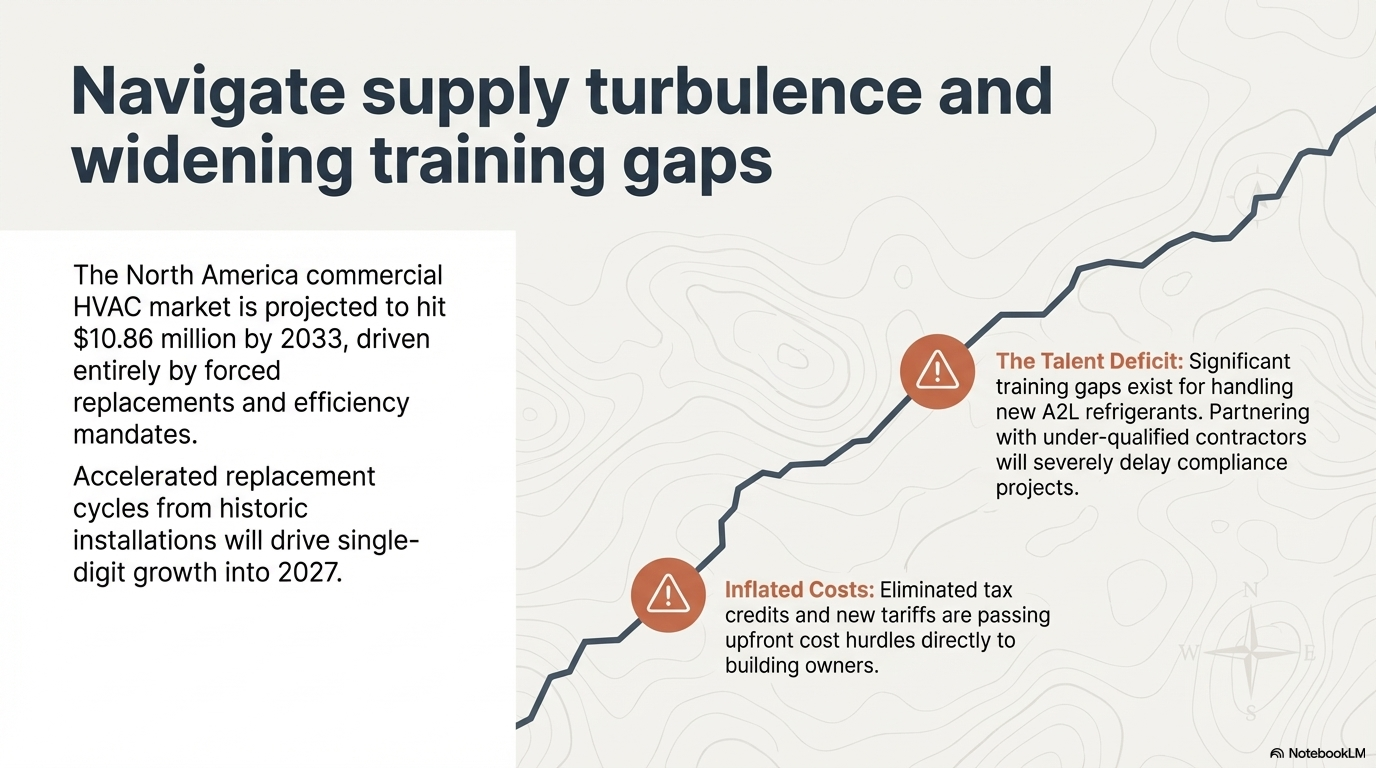
The North America commercial HVAC market is projected to hit $10.86 million by 2033, driven by replacements and efficiency mandates. Yet, eliminated tax credits and tariffs inflate costs for heat pumps and VRFs, passing savings hurdles to owners. Facility managers must partner with contractors skilled in A2L refrigerants, as training gaps could delay projects.
Replacement cycles from historic installations will accelerate into 2027, creating single-digit growth opportunities. Prioritize high-performance firms versed in code compliance and long-term planning to future-proof your portfolio.
Practical Action Items for 2026 Readiness
- Conduct a full HVAC assessment: Engage auditors for energy modeling on 10+ year-old systems in commercial buildings over 50,000 sq ft.
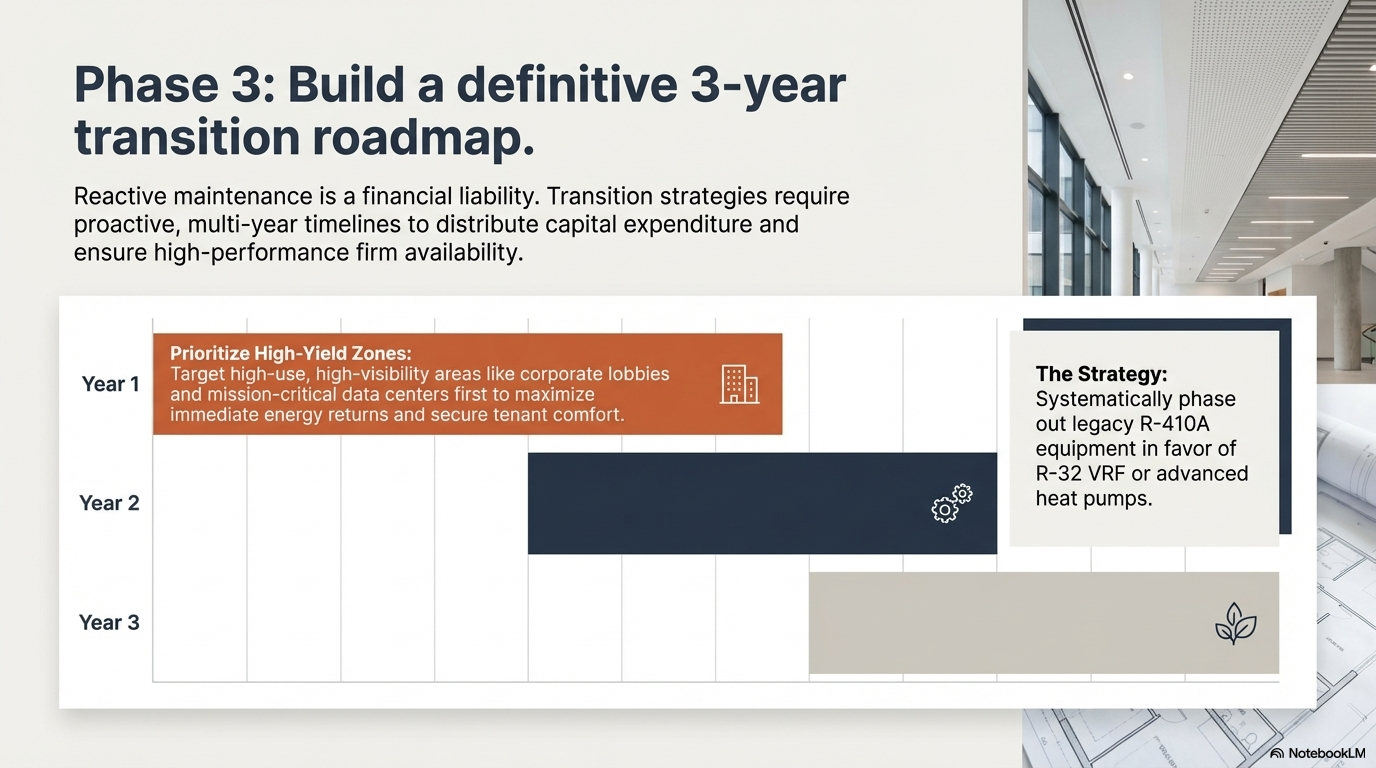
- Develop a 3-year transition plan: Phase R-410A equipment toward R-32 VRF or heat pumps, targeting high-use areas like lobbies and data centers.
- Train your team indirectly: Require contractors to certify in A2L handling and VRF commissioning.
- Monitor legislation: Track AIM Act updates and local energy codes affecting boilers in your region.
- Leverage tech: Invest in building management systems (BMS) integrated with Hybrid VRF for real-time optimization.
Your Next Step: Connect with Expert Commercial HVAC Contractors
Don't let 2026 catch you unprepared. The METUS outlook underscores the need for proactive planning to maintain compliance, cut costs, and boost occupant comfort. Visit My HVAC Tech, the leading commercial HVAC marketplace, to find vetted contractors specializing in VRF transitions, heat pump installs, and low-GWP retrofits tailored for property managers like you.

Find a Qualified Commercial HVAC Contractor
Browse vetted commercial HVAC contractors in your area, or explore commercial HVAC services like preventive maintenance, retrofits, and emergency repair. Are you a contractor? List your business on My HVAC Tech to reach property and facility managers actively searching for help.
Originally sourced from National Today


