

Top 10 Commercial HVAC Challenges for 2026: What Property & Facility Managers Must Know
Introduction: Why 2026 Is a Pivotal Year for Commercial HVAC Management
As a property or facility manager, you're no stranger to the pressures of maintaining efficient, compliant HVAC systems in office towers, retail centers, healthcare facilities, and warehouses. Heading into 2026, the industry faces unprecedented disruptions from accelerating regulations, technology shifts, and economic headwinds. According to HVAC Today, these top 10 challenges—ranging from electrification outpacing infrastructure to AIM Act refrigerant bans—will test building owners' resilience, driving up retrofit costs for systems over 20 years old and demanding proof-of-performance documentation. What does this mean for you? Higher operational expenses, compliance risks, and opportunities to future-proof your properties through strategic upgrades like VRF systems or modular chillers.
This article breaks down each challenge, its implications for commercial buildings (50-500+ tons), and practical action items to safeguard your budgets and tenant satisfaction.
1. Electrification Outpacing Building Infrastructure
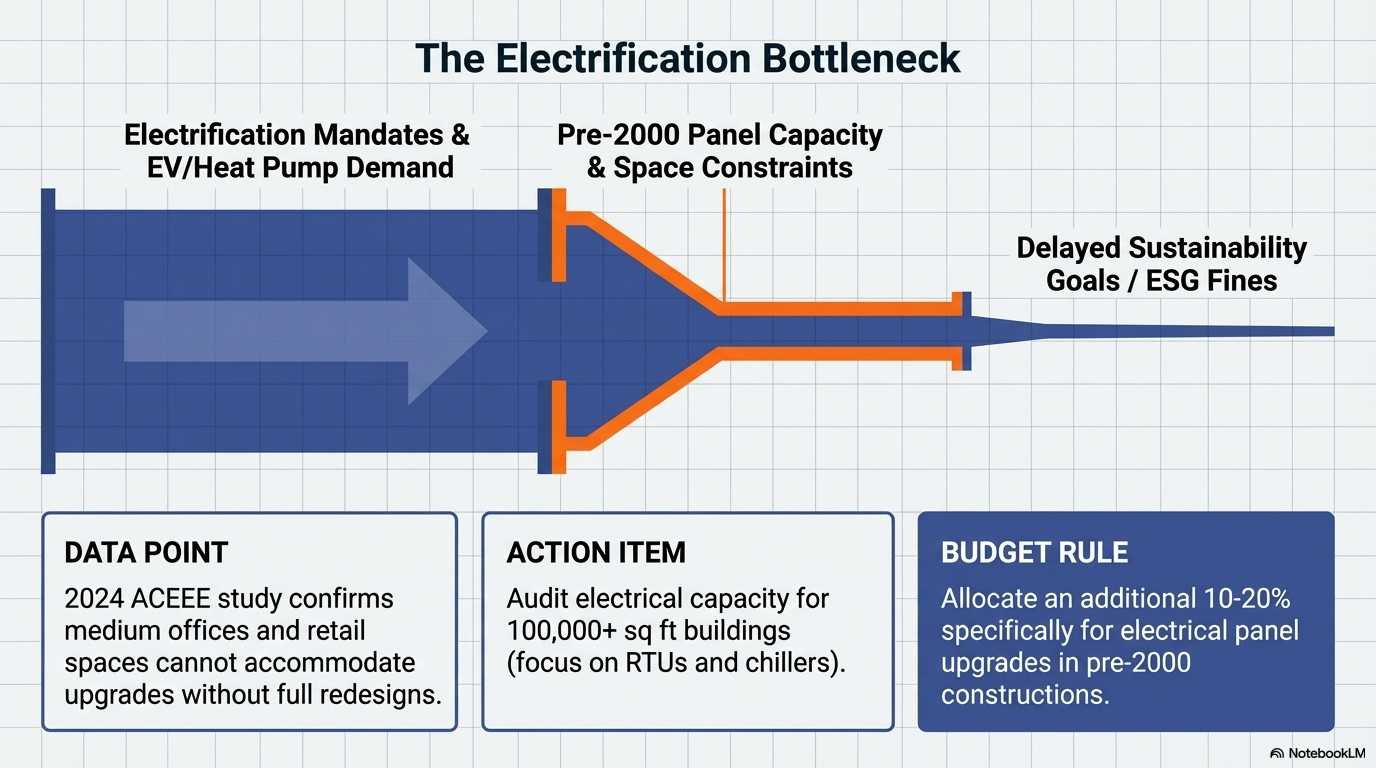
Electrification mandates are surging ahead, but many commercial buildings lack the electrical service or space for new heat pumps and EV chargers. A 2024 ACEEE study highlights that medium-sized offices and retail spaces often can't accommodate these upgrades without full redesigns. For property managers, this translates to delayed sustainability goals and potential fines in ESG-reporting cities.
Action Items:
- Conduct an electrical capacity audit for buildings over 100,000 sq ft—focus on rooftop units and chillers.
- Partner with contractors experienced in modular heat pumps for low-disruption retrofits.
- Budget 10-20% extra for panel upgrades in pre-2000 constructions.
2. Grid Stability as a New Design Hurdle
Even feasible electrification hits snags from unstable grids, per a 2025 Cornell study on HVAC load-shifting. In demand-response programs, poor air-mixing in large facilities (e.g., distribution centers) reduces efficiency, spiking peak energy costs for managers.
Action Items:
- Integrate smart controls for load-shifting in high-rise offices (200+ tons).
- Prioritize economizers in new rooftop units for grid-friendly ventilation.
3. Surging Commissioning and Proof-of-Performance Demands
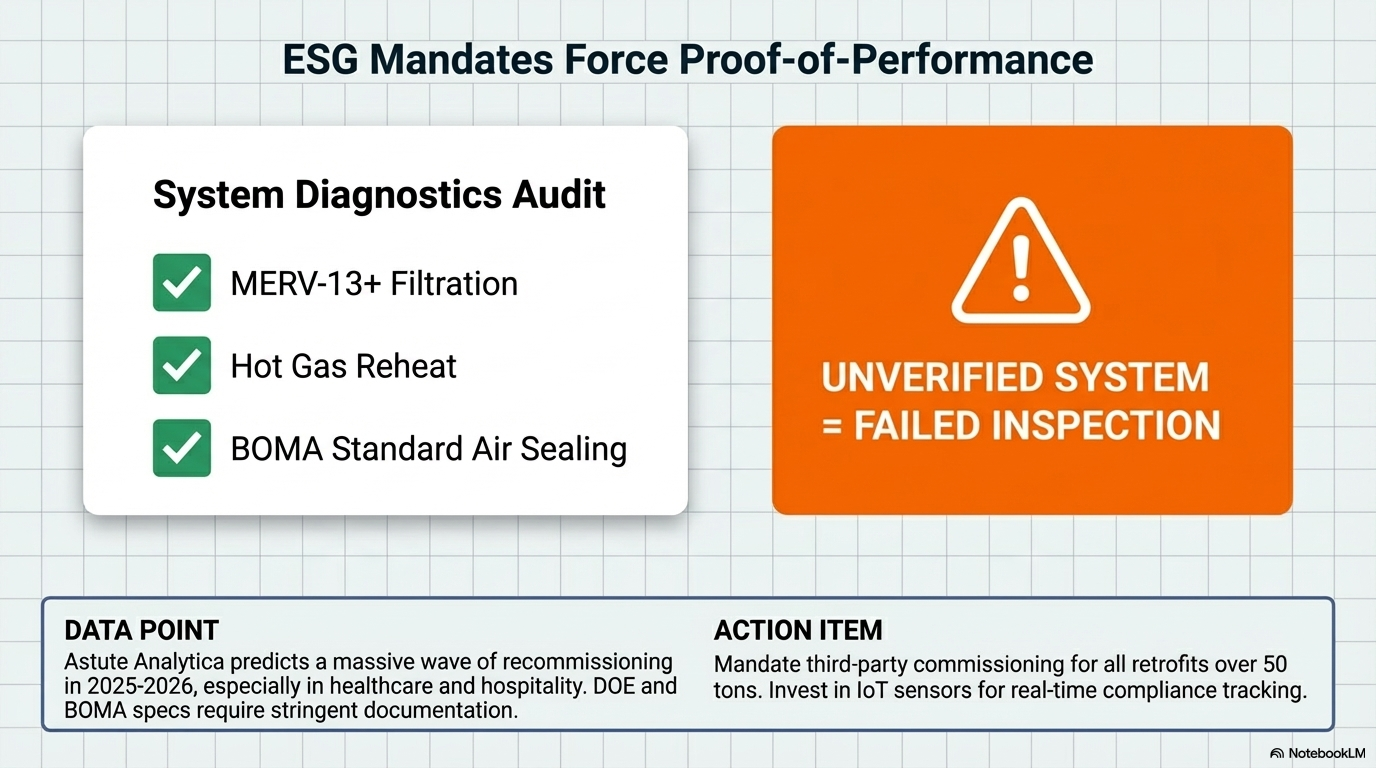
Owners now require verified performance post-install, especially for aging systems hitting 20+ years. Astute Analytica predicts a wave of recommissioning in 2025-2026 for healthcare and hospitality buildings. Non-compliance means failed inspections and tenant complaints.
Action Items:
- Mandate third-party commissioning for all retrofits over 50 tons.
- Invest in IoT sensors for real-time dashboards tracking efficiency.
4. Smart Buildings Lagging in Integration
Despite promises, many BAS platforms suffer compatibility issues, per Verified Market Research. Facility managers in multi-tenant retail struggle with fragmented data, leading to 15-20% energy waste.
Action Items:
- Upgrade to open-protocol controls for seamless VRF and DOAS integration.
- Target small commercial (under 50 tons) with packaged smart rooftop units.
5. AIM Act Refrigerant Regulations Banning R-410A
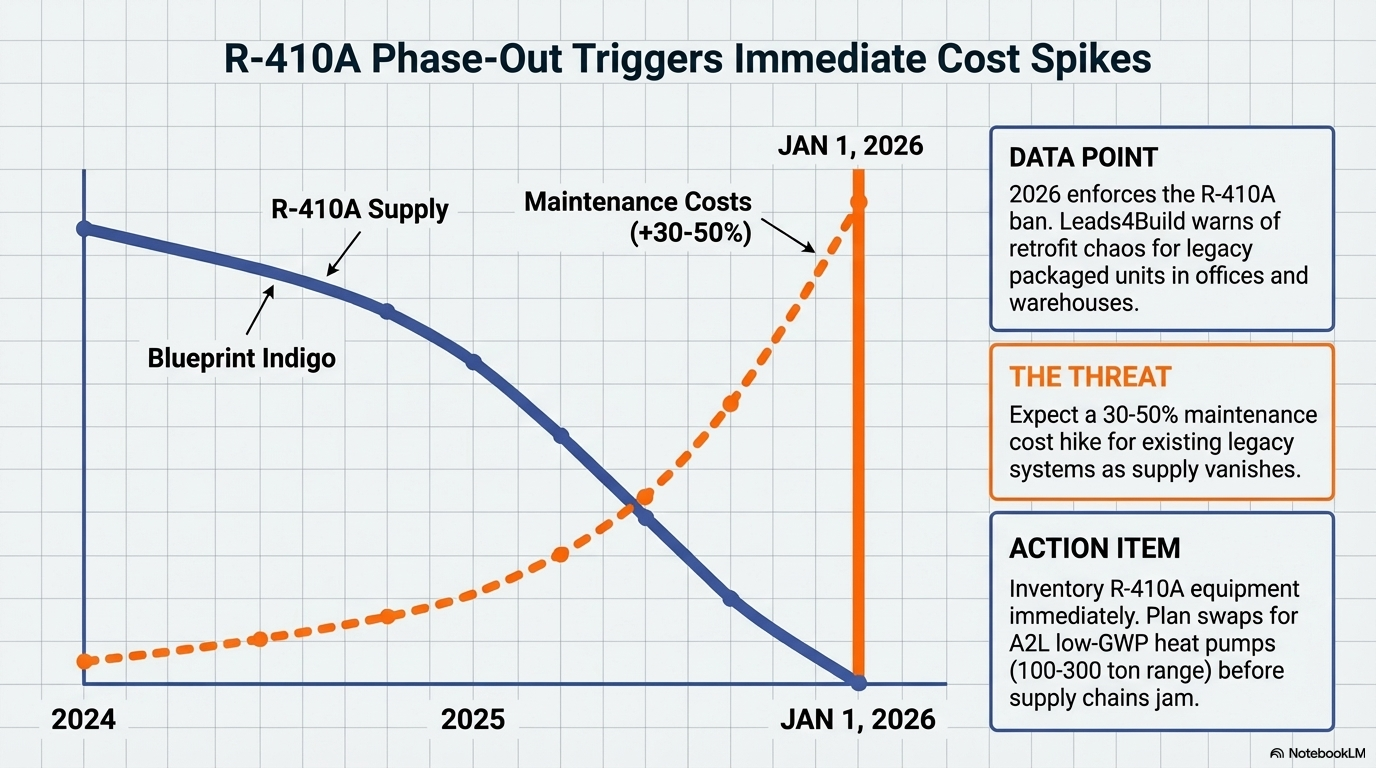
2026 enforces R-410A phase-out, forcing A2L refrigerant adoption and supply shortages. Leads4Build warns of retrofit chaos for existing packaged units in warehouses and offices. Expect 30-50% maintenance cost hikes for legacy systems.
Action Items:
- Inventory R-410A equipment now—plan swaps for low-GWP heat pumps in 100-300 ton ranges.
- Choose VRF for zoning in renovations, minimizing ductwork and leaks.
6. ESG and DOE Efficiency Mandates Intensify
DOE specs and BOMA standards demand air sealing and upgrades, especially in healthcare. Non-compliant buildings face fines and disclosure mandates, per 2026 energy regs.
Action Items:
- Implement MERV-13+ filtration and hot gas reheat for IAQ compliance.
- Document upgrades for ESG reports to attract green tenants.
7. Budget Squeeze from Inflation and Supply Volatility
Rising costs for parts and labor, noted by Astute Analytica and TM Capital, strain upgrade budgets amid volatile energy prices. Managers must balance performance with affordability.
Action Items:
- Seek modular chillers for scalable installs in large facilities (500+ tons).
- Negotiate multi-year contracts with vetted contractors for cost locks.
Additional Pressures: IAQ, Controls, and System Choices
Stricter IAQ rules push ventilation and monitoring, favoring DOAS-paired VRF for offices and retail. Smart integrations cut waste by 20-30% via predictive maintenance. For cold climates, cold-climate heat pumps excel in northern warehouses.
Protect Your Portfolio: Start Planning Today
These challenges signal a shift toward resilient, efficient systems—but only with proactive management. Property and facility managers who audit now and select compliant tech like advanced rooftop units or VRF will lower TCO and boost property values.
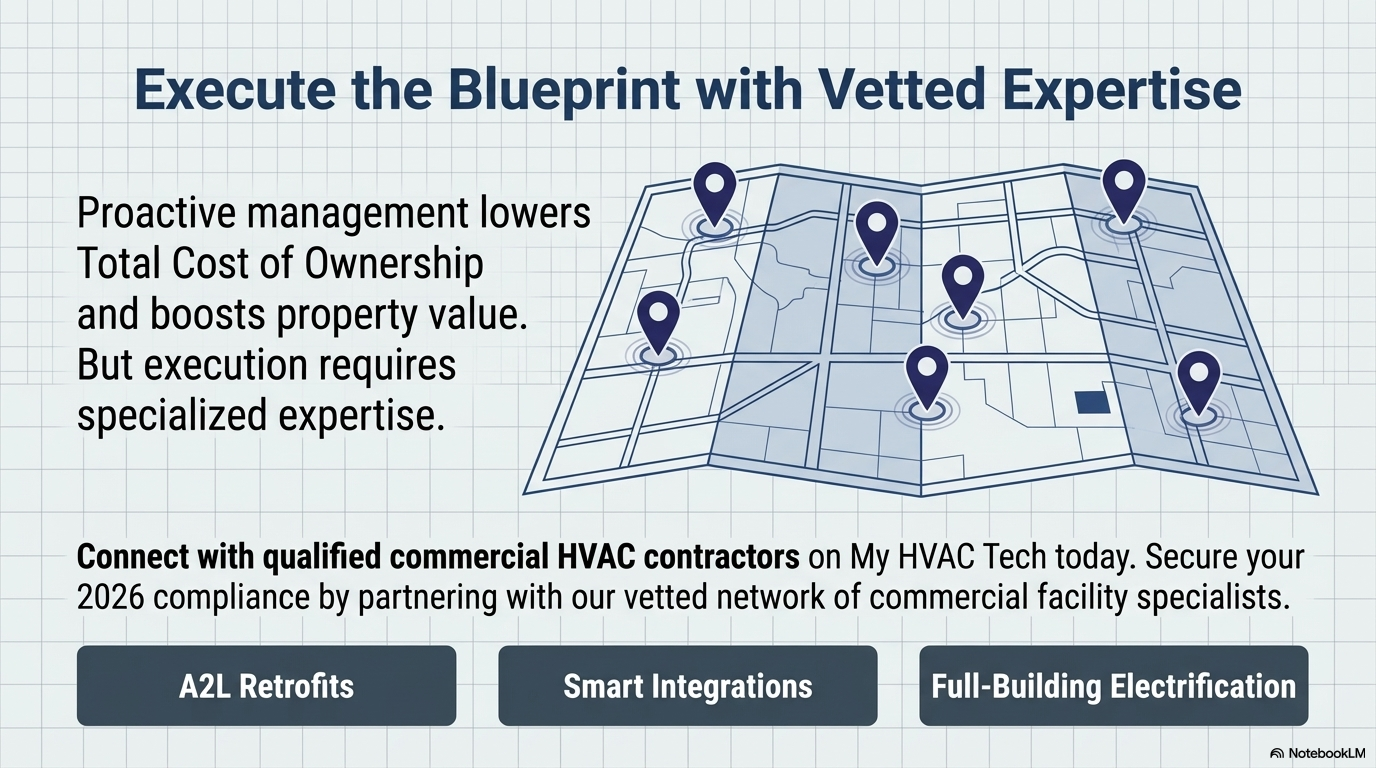
Ready to tackle 2026? Find qualified commercial HVAC contractors on My HVAC Tech today. Connect with vetted pros specializing in A2L retrofits, smart integrations, and full-building electrification solutions to keep your buildings compliant and cost-effective.
Find a Qualified Commercial HVAC Contractor
Browse vetted commercial HVAC contractors in your area, or explore commercial HVAC services like preventive maintenance, retrofits, and emergency repair. Are you a contractor? List your business on My HVAC Tech to reach property and facility managers actively searching for help.
Originally sourced from HVAC Today


