

A2L Refrigerant Regulations: Compliance Guide for Commercial Buildings
Quick Answers for Property & Facility Managers
What is A2L refrigerant and why does it matter for commercial buildings?
A2L refrigerant is an ASHRAE 34 safety class for low‑toxicity, mildly flammable, low‑GWP refrigerants replacing many legacy HFCs in HVAC and refrigeration systems.[1][4][7][8] For commercial buildings, this means new equipment designs, different safety and ventilation requirements, and regulatory deadlines under the AIM Act and EPA rules that affect capital planning.
What are the key A2L refrigerant regulations I need to plan for?
Core A2L refrigerant regulations include the HFC phasedown under the AIM Act, EPA sector‑based GWP limits and SNAP approvals, ASHRAE Standards 15 and 34, UL product safety standards, and state and local adoption of the IMC and IFC.[1][2][3][6][8][10] Together, they dictate where A2L equipment can be used, charge limits, ventilation, leak detection, and installation practices.
How soon do property and facility managers need to act on A2L refrigerant changes?
Under EPA rules implementing the AIM Act, many new comfort‑cooling and commercial refrigeration systems must transition to lower‑GWP refrigerants by mid‑decade, with manufacturers restricted from using high‑GWP HFCs in new equipment from 2025 in key categories.[3][6][9] Property and facility managers should incorporate A2L refrigerant into 3‑ to 5‑year capital plans, focusing on major rooftop, chiller, VRF, and walk‑in replacements.
What is A2L refrigerant and how is it classified?
A2L refrigerant is a safety classification defined by ASHRAE Standard 34 and mirrored in ISO 817 for refrigerants with low toxicity ("A") and lower, "mild" flammability ("2L").[1][4][7][8] The "L" denotes low burning velocity, meaning these gases are significantly harder to ignite than typical flammable gases.[1][4][7]
Common A2L refrigerants used or proposed in commercial HVAC and refrigeration include R‑32, R‑454B, R‑452B, and certain HFOs such as R‑1234yf.[1][3][4][8] They are being adopted to replace higher‑GWP HFCs such as R‑410A, R‑404A, and HFC‑134a across packaged rooftop units, VRF systems, chillers, split systems, and commercial refrigeration equipment.[3][4][6][7]
For property managers, facility managers, and building owners, the key takeaway is that A2L refrigerant is not optional long term: it is central to the regulatory transition away from high‑GWP HFCs and is increasingly the default refrigerant class in new commercial equipment.[3][6][8][9]
Regulatory drivers behind the move to A2L refrigerant
Multiple federal, industry, and local frameworks are pushing the market toward A2L refrigerant in commercial buildings:
- AIM Act (American Innovation and Manufacturing Act) – Passed by Congress in 2020, it authorizes the U.S. Environmental Protection Agency (EPA) to phase down the production and consumption of HFCs over 13 years, targeting a 75% reduction by 2036.[3] This phasedown makes legacy high‑GWP HFCs scarcer and costlier over time.
- EPA sector-based GWP limits and SNAP approvals – EPA is implementing the AIM Act through sector rules that cap the allowable GWP of refrigerants in specific applications and through its Significant New Alternatives Policy (SNAP) program.[3][6] In 2024, SNAP Rule 26 approved new A2L refrigerant options and higher charge limits for commercial applications.[6]
- ASHRAE Standards 34 and 15 – ASHRAE 34 defines the A2L safety classification and assigns refrigerant designations and concentration limits, while ASHRAE 15 sets system application and safety requirements, including charge limits, ventilation, leak detection, and machinery room provisions for A2Ls.[1][2][7][8]
- UL product safety standards – Standards such as UL 60335‑2‑40 for comfort cooling and UL 60335‑2‑89 4th Edition for commercial refrigeration define safety controls for equipment using flammable refrigerants, including A2Ls, covering leak detection, automatic shutdown, and ventilation requirements.[3][5]
- Building and fire codes (IMC, IFC, state/local amendments) – The International Mechanical Code (IMC) and International Fire Code (IFC) now include detailed provisions for A2L refrigerant piping, shafts, ventilation, and equipment siting.[2] States and cities adopt these codes on their own timelines, sometimes with amendments.[2][10]
Together, these regulations mean most new commercial HVAC and refrigeration equipment installed over the next decade will use A2L refrigerant or other low‑GWP alternatives, with specific design and installation controls that directly affect building infrastructure and tenant safety.[3][6][8][9]
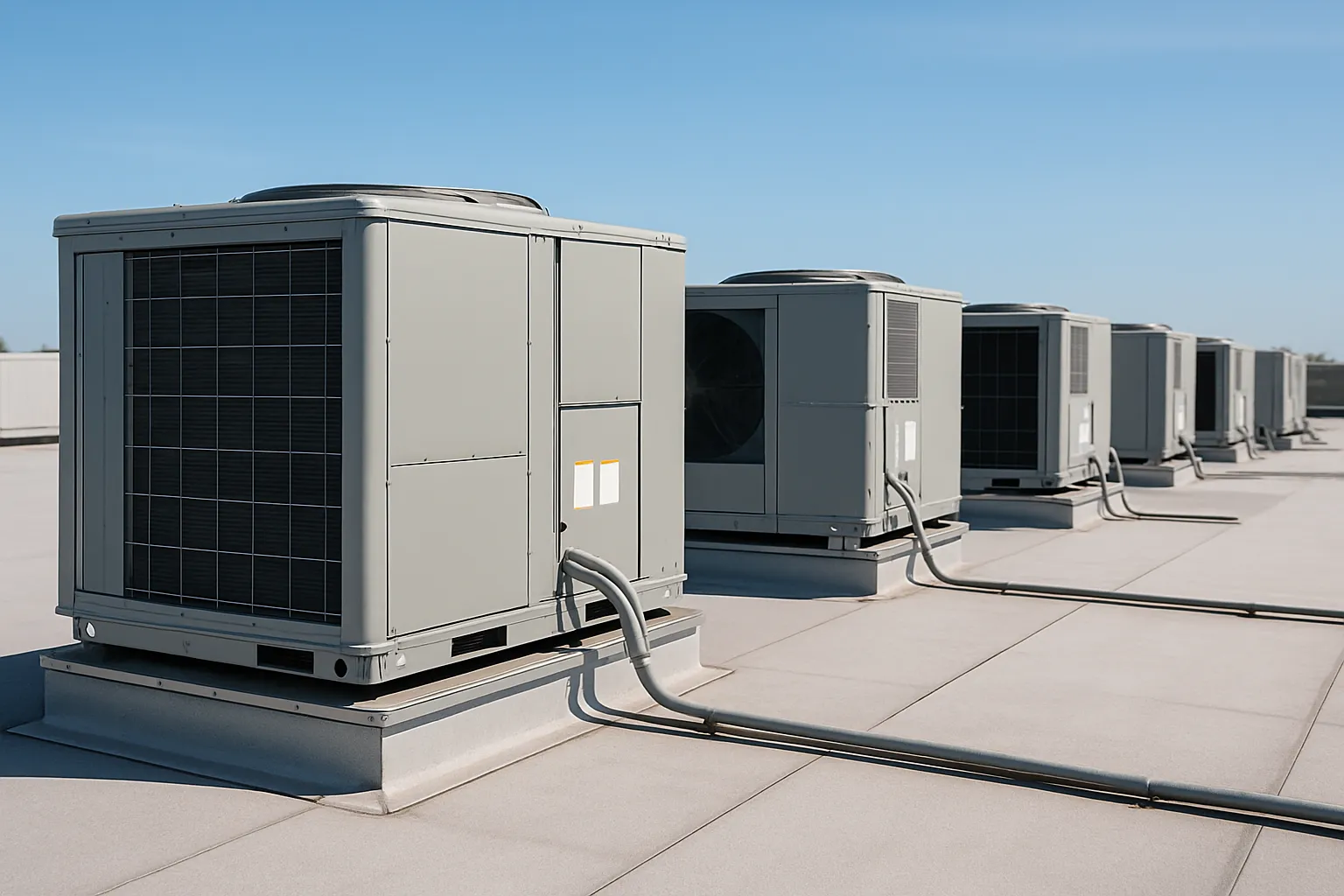
Key federal timelines, standards, and code requirements for A2L refrigerant
While exact dates vary by equipment type and jurisdiction, several milestones and standards are particularly important for commercial building portfolios:
AIM Act and EPA timelines
Under the AIM Act, EPA has established a production and consumption phasedown schedule for HFCs, with large step‑downs already in effect and additional reductions scheduled through 2036.[3] In parallel, EPA is adopting sector‑specific GWP limits that effectively push new equipment toward A2L refrigerant and other low‑GWP options.[3][6][9]
In commercial refrigeration, EPA rules require low‑GWP refrigerants for certain new equipment such as walk‑in coolers and freezers by the middle of this decade, with many designs expected to use A2L refrigerants and UL 60335‑2‑89 compliant safety controls.[3] Existing installations can typically continue operating but may face higher refrigerant costs and more limited options at end of life.[3]
ASHRAE 15 and ASHRAE 34
ASHRAE 34’s A2L classification specifies that these refrigerants have low toxicity and lower flammability with a burning velocity below 10 cm/s.[1][4][7] It also sets maximum refrigerant concentration values for occupied spaces, which are critical to system design and charge calculations.[2]
ASHRAE 15, referenced by modern versions of the IMC, incorporates these limits into system‑level requirements, including whether a machinery room is needed, what leak detection is required, and how refrigerant piping must be routed through buildings.[2] The 2022 edition includes provisions allowing certain piping arrangements without full shafts if refrigerant concentration limits are not exceeded.[2]
IMC, IFC, and building code implications
The International Mechanical Code includes specific sections on A2L refrigerant piping and containment. For multi‑story commercial buildings, one of the biggest impacts is the requirement for shaft enclosures when A2L refrigerant piping penetrates two or more floor/ceiling assemblies (IMC 1109.2.5).[2] These shafts must be either naturally or mechanically ventilated.[2]
If natural ventilation is used, the code requires minimum opening sizes (for example, a 4‑inch diameter opening at the lowest point of the shaft).[2] Mechanical ventilation must achieve certain airflow velocities and either operate continuously or be activated automatically via refrigerant detectors.[2] The 2022 edition of ASHRAE 15, referenced in the 2024 IMC, provides alternatives where shafts may be avoided if refrigerant concentrations remain below ASHRAE 34 limits or if piping is fully outdoors.[2]
Local fire departments may impose additional requirements, such as permits, refrigerant leak detectors, ventilation criteria, and clearances from building openings to prevent migration of refrigerant into egress paths.[5] For example, guidance from New York City emphasizes adequate ventilation, leak detection sensors, equipment siting away from doors and windows, and avoiding flammable refrigerant equipment in means of egress.[5]
Safety, liability, and design considerations for commercial properties
From a risk and liability standpoint, A2L refrigerant brings both advantages and new obligations. A2Ls are designed to be difficult to ignite and are generally considered safe for most HVAC and refrigeration applications when installed according to standards.[1][4][7] Even open flames struggle to ignite A2L refrigerants under test conditions, and they typically require a continuous ignition source and specific concentration range to sustain combustion.[4][6][7]
However, their mild flammability means they are subject to additional safety regulations compared to A1 (non‑flammable) refrigerants.[1][4][7][8] For commercial buildings, important design considerations include:
- Refrigerant charge and room volume – Systems must be designed so that a worst‑case leak does not exceed concentration limits established in ASHRAE 34 for the smallest occupied space impacted.[2][7]
- Ventilation and shaft design – Multi‑story refrigerant piping may need rated shafts with either natural or mechanical ventilation per IMC and ASHRAE guidance.[2]
- Leak detection and automatic mitigation – Many UL 60335‑compliant A2L systems incorporate refrigerant leak detectors that can shut down compressors and initiate ventilation to keep concentrations below a percentage of the lower flammability limit.[3][5]
- Equipment siting – Fire codes and manufacturer instructions may prohibit locating A2L equipment in egress corridors and require setbacks from doors and windows to avoid refrigerant migration into occupied spaces in the event of a leak.[5]
- Tools and service practices – Service equipment such as vacuum pumps must be rated for A2L refrigerant, and technicians must follow specific procedures for evacuation, charging, and leak repair.[1][5]
For owners and managers of offices, healthcare facilities, data centers, and retail or warehouse properties, these requirements affect mechanical room layouts, rooftop equipment placements, shaft space allocation, and long‑term life‑safety strategies.
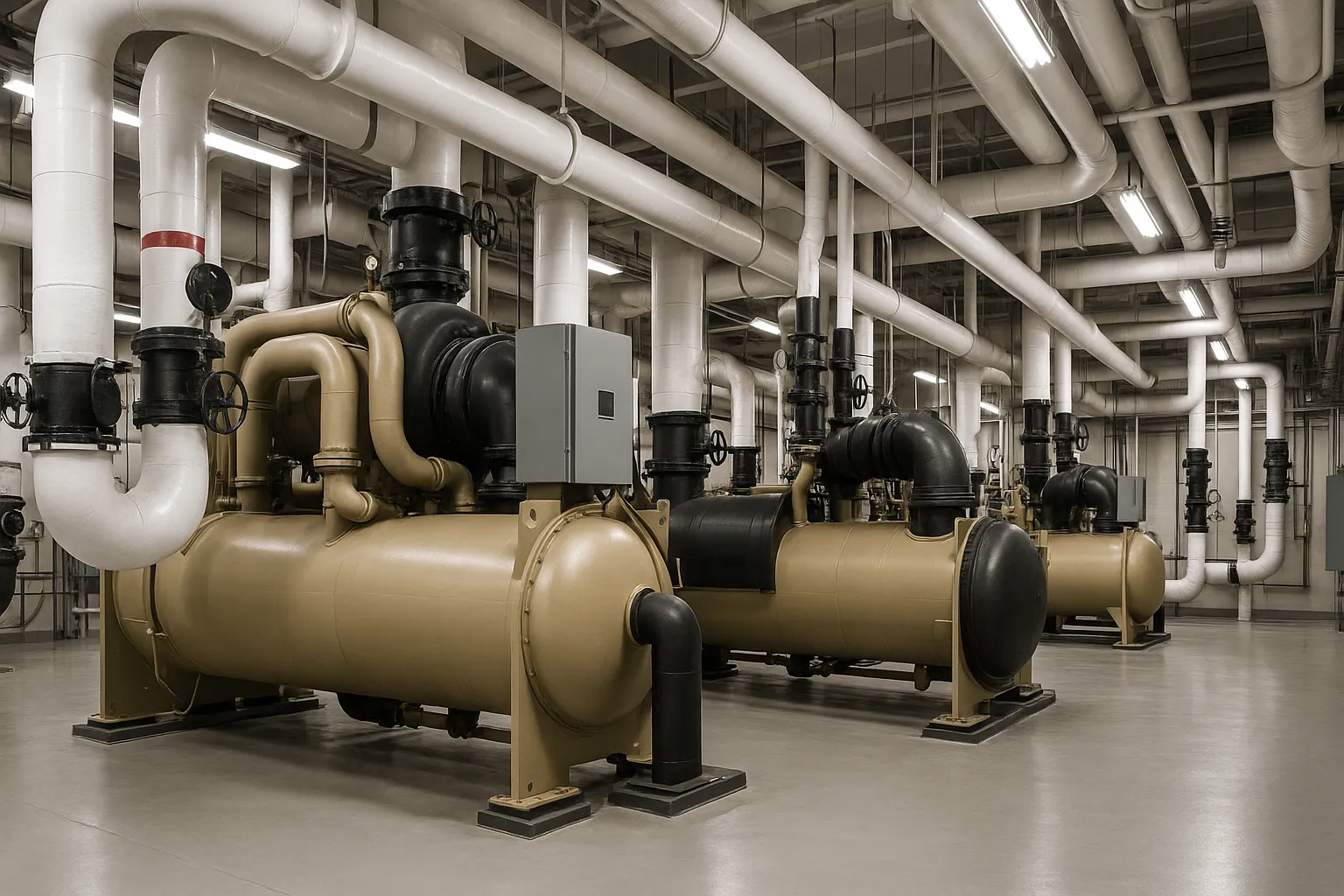
Penalties and risks of non‑compliance with A2L refrigerant requirements
Non‑compliance with A2L refrigerant regulations can expose commercial property stakeholders to multiple layers of risk:
- Federal enforcement – The EPA can enforce AIM Act and SNAP requirements, including penalties for illegal production, import, or use of non‑compliant refrigerants, as well as violations of sector‑based GWP limits.[3][6]
- Local code and fire enforcement – Building and fire officials can halt projects, deny occupancy, or issue violations where installations fail to meet IMC/IFC or local code requirements for A2L refrigerant piping, shafts, ventilation, and equipment siting.[2][5][10]
- Insurance and liability exposure – In the event of an incident involving refrigerant release, fire, or occupant exposure, failure to follow ASHRAE, UL, and code requirements could significantly increase liability and complicate insurance coverage.
- Stranded assets and retrofit costs – Specifying or installing equipment that does not align with emerging A2L refrigerant standards may shorten asset life, limit service options, and require expensive retrofits or premature replacements as regulations tighten.[3][6][9]
Proactive compliance planning around A2L refrigerant helps avoid these risks and can position buildings more favorably for ESG reporting, tenant expectations, and future sale or refinancing.
Step-by-step A2L refrigerant compliance roadmap for commercial portfolios
To manage the transition to A2L refrigerant across a portfolio of offices, medical buildings, retail centers, or industrial facilities, consider the following staged roadmap:
- 1. Inventory existing HVAC and refrigeration assets
Develop a refrigerant and equipment inventory by building, including equipment type (e.g., 20–50 ton rooftop units, VRF systems, chillers, walk‑ins), age, current refrigerant (R‑410A, R‑404A, HFC‑134a, etc.), and estimated remaining life. Flag all large tonnage systems and central plants as strategic priorities. - 2. Map regulatory exposure
Work with your mechanical engineer or consultant to overlay federal EPA sector deadlines and local code adoption status onto your portfolio.[3][6][9][10] Use resources such as industry building code maps to identify which jurisdictions have updated codes to allow A2L refrigerant equipment and what local amendments may apply.[10] - 3. Update design standards and specifications
Ensure your corporate or campus design standards reference ASHRAE 15 and 34, applicable UL standards (such as UL 60335‑2‑40 and UL 60335‑2‑89), and the most recent IMC/IFC requirements for A2Ls.[1][2][3][6][8] Require designers and contractors to account for refrigerant concentration limits, shafts, ventilation, leak detection, and service clearances when proposing A2L refrigerant systems. - 4. Integrate A2L refrigerant into capital planning
Align replacement schedules for major systems with regulatory milestones and evolving refrigerant availability.[3][6][9] Prioritize replacement of older, high‑GWP HFC systems in critical spaces (data centers, healthcare, large office towers) with new equipment designed for A2L refrigerant, evaluating life‑cycle cost rather than only first cost. - 5. Coordinate with code officials and fire authorities
Before major projects, meet with local building and fire officials to confirm expectations for A2L refrigerant installations, including permitting, shaft design, ventilation, detection, and equipment placement.[2][5][10] Early engagement reduces redesign risk and schedule delays. - 6. Update operations, safety, and emergency procedures
Ensure your facility operations team understands the basics of A2L refrigerant, including the role of leak detection, ventilation, and automatic shutoff systems.[5][7] Integrate A2L considerations into emergency response and incident reporting procedures, and coordinate with your fire protection consultant. - 7. Align vendor selection and service contracts
Specify that HVAC service partners are trained, certified, and equipped to work with A2L refrigerant, including use of A2L‑rated tools and adherence to UL, ASHRAE, and manufacturer requirements.[1][5][7] Build these expectations into RFPs and service agreements.
By following this roadmap, commercial property stakeholders can turn a regulatory challenge into a structured modernization program that improves efficiency, reduces climate impact, and strengthens compliance posture.
Frequently Asked Questions
How will A2L refrigerant affect the total cost of ownership for my commercial HVAC systems?
A2L refrigerant can increase design and installation complexity due to ventilation, piping, and leak detection requirements, but it is central to the regulatory path away from high‑GWP HFCs.[2][3][6][8] Over a system’s life, lower refrigerant costs under the HFC phasedown and improved efficiency of new equipment can offset higher first costs, especially for larger tonnage systems.
Can I keep operating existing systems that don’t use A2L refrigerant?
Most existing commercial systems using HFCs can continue operating under current EPA rules, but new equipment in many categories must transition to lower‑GWP refrigerants on specific timelines.[3][6][9] Managers should plan for rising costs and declining availability of some legacy refrigerants and incorporate A2L‑based replacements into long‑term capital planning.
Are A2L refrigerant systems safe in high-occupancy buildings like offices and hospitals?
Yes, when designed and installed per ASHRAE, UL, IMC, and fire code requirements, A2L refrigerant systems are considered safe for most applications and are difficult to ignite.[1][2][4][7][8] Safety relies on proper charge limits, ventilation, leak detection, and adherence to manufacturer instructions—areas facility teams should review carefully during design and commissioning.
What building types and equipment are most impacted by A2L refrigerant regulations?
Large commercial properties with many rooftop units, VRF systems, central chillers, and commercial refrigeration equipment are most affected.[3][4][6][7] Multi‑story office towers, healthcare and lab facilities, grocery‑anchored retail, and distribution centers should pay particular attention to A2L refrigerant piping routes, shafts, and code requirements for walk‑ins and other refrigerated spaces.
How do I know if my jurisdiction allows A2L refrigerant equipment today?
Adoption of A2L refrigerant provisions depends on which edition of the IMC/IFC your state or city has adopted and any local amendments.[2][10] Industry building code maps and guidance from organizations such as AHRI can show where A2L refrigerant equipment is permitted, but you should always confirm with your local building and fire officials before finalizing designs.
Related Reading on My HVAC Tech
- Commercial HVAC Repair: Practical Tips for Property Managers
- Sussman EWx Electric Boilers Expand for Commercial Buildings
Find a Qualified Commercial HVAC Contractor
Need help acting on this? Browse vetted commercial HVAC contractors in your area, or explore commercial HVAC services like preventive maintenance, retrofits, and emergency repair. Are you a contractor? List your business on My HVAC Tech to reach property and facility managers actively searching for help.
