

Commercial HVAC Market Update: What Q1 Sales Growth Means for Facilities
Quick Answers for Property & Facility Managers
How should property and facility managers respond to Q1 commercial HVAC sales growth at Carrier, Lennox, and Trane?
Treat the strong Q1 HVAC sales and backlogs as a signal to proactively plan projects. Lock in design, funding, and timelines for major replacements, data center cooling, and energy-efficiency retrofits 6–12 months ahead to secure capacity, avoid delays, and align with ASHRAE and DOE efficiency standards.
Does strong HVAC demand and a 21% jump in Trane bookings mean longer lead times for my building projects?
Yes. With Trane bookings up 21% year over year and commercial HVAC bookings above 20%, OEMs are running heavier order backlogs. Expect longer lead times for large rooftop units, chillers, and data center systems. Build extra schedule float into your capital plans and reserve production slots early.
What opportunities does this HVAC market momentum create for reducing operating costs in my portfolio?
Stronger OEM pipelines are being fueled by energy-efficiency projects and service agreements. That signals robust vendor offerings for high-efficiency equipment, controls, and performance-based maintenance. Use this window to rebid service, bundle upgrades, and pursue DOE and utility incentives that lower lifecycle cost per square foot.
Commercial HVAC Momentum: Why Q1 Sales Growth Matters to Facilities
Carrier, Lennox, and Trane all reported first-quarter sales growth, healthier backlogs, and strong demand pipelines in their commercial HVAC businesses. Trane alone reported a 21% year-over-year increase in bookings to $5 billion, with commercial HVAC bookings up more than 20%. For property managers, facility leaders, and building owners, this is not just a manufacturer story—it directly affects project timing, budgets, risk, and occupant expectations.
This growth is being driven by three forces you are already feeling in the field: energy-efficiency and decarbonization requirements, surging data center and IT cooling needs, and expanded service and retrofit pipelines. Understanding how those drivers play out across your portfolio can help you get ahead of supply constraints, align with ASHRAE and DOE guidance, and unlock better lifecycle economics.
The question is no longer whether you will need to upgrade HVAC systems, but how strategically you will time and stage those investments given the industry’s current trajectory.
Energy-Efficiency and Decarbonization: Capital Planning Implications
A major factor behind OEM growth is demand for higher-efficiency systems and decarbonization-focused retrofits. Federal and state policies are pushing buildings toward better energy performance, and many investors and tenants now expect alignment with ASHRAE, DOE, and ENERGY STAR benchmarks.
ASHRAE standards such as ASHRAE 90.1 for energy efficiency and ASHRAE 62.1 for ventilation increasingly influence local codes and green building requirements. DOE minimum efficiency standards for unitary equipment and chillers are also ratcheting up over time, driving demand for new, compliant systems in the 5–50 ton rooftop range and 150–800 ton chiller range.
For property and facility managers, the practical implications are clear:
- Front-load your HVAC capital planning. Build 3–5 year replacement roadmaps for aging RTUs, chillers, boilers, and heat pumps, prioritizing assets with poor energy performance and high failure risk.
- Coordinate with energy and ESG teams. Tie HVAC upgrades to corporate ESG targets and energy-reduction goals so HVAC investments support portfolio-wide carbon and cost metrics, not just isolated comfort issues.
- Use ASHRAE and DOE as your North Star. When evaluating equipment, insist on documentation of compliance with current ASHRAE 90.1 and DOE efficiency requirements, and factor future code tightening into your selections.
- Target whole-building performance. Consider controls, zoning, and envelope measures alongside equipment; many owners see the best ROI when HVAC upgrades are bundled with BAS optimization and commissioning.
Because energy and decarbonization projects are driving part of the manufacturers’ backlog, early decision-making is essential. Waiting until a major component fails may mean paying more in emergency premiums and accepting suboptimal equipment just to stay online.
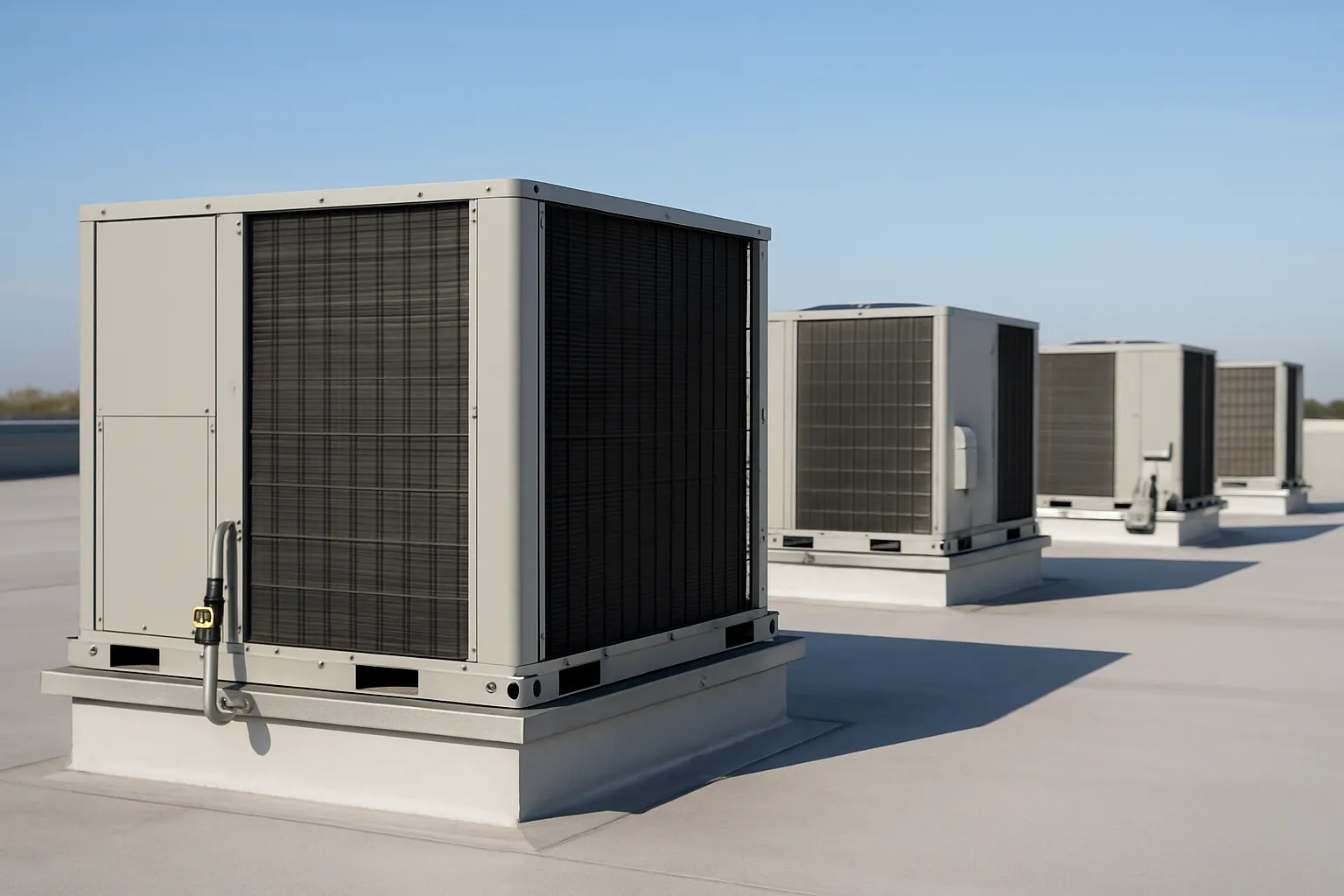
Data Center and IT Loads: Cooling Strategies for Modern Buildings
The same OEMs reporting strong Q1 growth are also highlighting data center and IT-related demand. Even outside large hyperscale facilities, many commercial buildings are seeing higher, more concentrated heat loads from server rooms, network closets, and tenant IT spaces.
For owners and facility managers of office, mixed-use, higher education, and healthcare properties, this has several implications:
- Evaluate localized cooling for IT spaces. Central systems designed for traditional office loads may not handle dense IT equipment. Consider 2–20 ton precision cooling, in-row units, or dedicated split systems for server rooms and critical telecom spaces.
- Assess redundancy expectations. Many tenants now view IT uptime as mission-critical. Review N+1 or better redundancy for cooling, especially where a single 10–30 ton system serves a high-value IT room.
- Plan for power and space. Future IT expansion may require additional cooling capacity. Coordinate electrical, floor loading, and service clearances so you can add units without major rework.
- Align with ASHRAE TC 9.9 guidelines. ASHRAE provides recommended thermal guidelines for data processing environments; using these benchmarks in design and operations helps manage both reliability and efficiency.
As data center and IT loads continue to fuel OEM growth, buildings that plan now for scalable cooling will be better positioned to attract and retain tenants with higher digital demands.
OEM Backlogs and Production Hurdles: Managing Lead Times and Project Risk
While manufacturers reported Q1 growth, they also cited heavier backlogs and production challenges. Strong bookings—such as Trane’s more than 20% growth in commercial HVAC bookings—are positive signals for industry health, but they can translate into longer lead times for large equipment, specialized configurations, and custom controls packages.
For a 100,000–500,000 square-foot commercial building, a single delayed 50–300 ton chiller or a bank of 20–40 ton DOAS units can derail renovation schedules and lease-up plans. Property and facility leaders should adjust their risk management practices accordingly:
- Add lead-time buffers. For major rooftop units, chillers, and custom AHUs, plan on longer procurement times than you experienced pre-2020 and build that into your construction schedules.
- Reserve production slots early. Once a project is financially approved, push design teams and contractors to finalize selections so the OEM can schedule production—even while other trades are still mobilizing.
- Pre-approve alternates. Work with your engineers to define acceptable alternative manufacturers and model tiers at the design stage to maintain flexibility if your preferred unit gets pushed out.
- Coordinate with asset management. Communicate lead-time risk to ownership and lenders so they understand why early commitment may reduce cost and schedule risk.
Production hurdles do not mean projects should be delayed; they simply require earlier, more disciplined decision-making from the ownership and facilities side of the table.
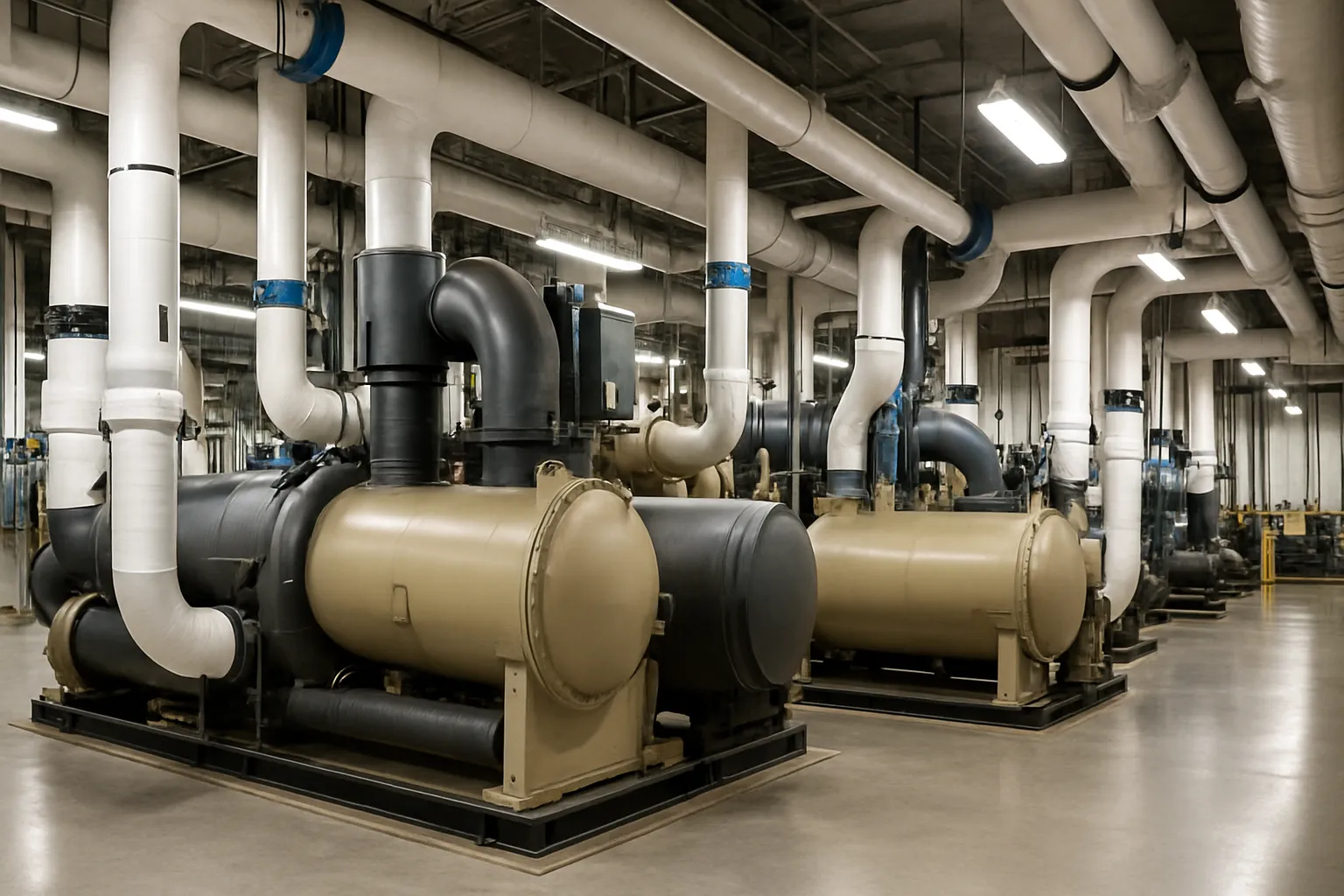
Service and Maintenance Pipelines: Turning OEM Strength into Portfolio Resilience
Another pillar of OEM growth is expanded services—multi-year maintenance contracts, performance-based agreements, and retrofit programs. For building operators, this is an opportunity to offload risk and enhance performance, provided contracts are structured around measurable outcomes.
EPA and DOE both emphasize ongoing maintenance and proper operation as critical to achieving real-world energy savings. Deferred maintenance erodes efficiency, shortens equipment life, and increases failure risk during extreme weather. To leverage the current market:
- Revisit service levels. Move from break-fix arrangements to structured preventive or predictive maintenance for critical assets (chillers, boilers, 20+ ton RTUs, DOAS units, and dedicated data center systems).
- Define clear KPIs. Include response times, uptime targets, and energy-performance indicators in your service agreements, and tie renewal to performance.
- Standardize across the portfolio. Consolidating service for multiple properties (where feasible) can improve pricing, bench depth, and priority response during peak seasons.
- Use OEM and ASHRAE guidance for PM tasks. Ensure preventive-maintenance scopes align with manufacturer recommendations and ASHRAE guidelines to protect warranties and performance.
Strong OEM service pipelines indicate that more owners are taking maintenance seriously. Aligning with that trend can reduce your surprise failures, claims exposure, and reputational risk with tenants.
Action Plan for Property Managers and Building Owners
Given the Q1 results and market signals, property and facility leaders can take a structured approach to HVAC strategy over the next 12–24 months. The goal is to convert market momentum into predictable performance, not reactive spending.
Key actions for different building types include:
- Office and mixed-use (50,000–500,000 sq. ft.). Prioritize replacement of aging 10–50 ton RTUs and central plants with high-efficiency models; integrate advanced controls and submetering to support tenant billing and ESG reporting.
- Industrial and logistics. Focus on ventilation, destratification, and targeted cooling of process or high-occupancy zones. Evaluate dedicated systems for high-value product storage areas.
- Healthcare and higher education. Align projects with infection control and ventilation requirements, including ASHRAE’s healthcare guidance. Carefully stage upgrades to avoid downtime in critical spaces.
- Data center and tech-heavy tenants. Engage tenants early about IT growth, redundancy needs, and acceptable thermal ranges, then design scalable cooling solutions that can be expanded with minimal disruption.
Across all asset classes, three strategic levers will help you capitalize on the current HVAC market direction:
- Portfolio-wide assessment. Conduct a portfolio-level HVAC condition and risk assessment, ranking systems by age, failure probability, and energy intensity to prioritize capital.
- Integrated financial modeling. Work with finance to compare first cost versus lifecycle cost, factoring in energy, maintenance, and downtime risk. Even without quoting exact figures, industry practice shows that higher-efficiency systems frequently pay back via lower operating expenses and fewer disruptions.
- Vendor and OEM alignment. Build relationships with OEMs and top-tier contractors who understand ASHRAE, DOE, and EPA frameworks and can translate them into practical projects for your buildings.
The Q1 performance of Carrier, Lennox, and Trane signals a commercial HVAC market that is both strong and capacity-constrained in key segments. Property managers, facility managers, and building owners who plan proactively—rather than waiting for failures—will be best positioned to secure equipment, control costs, and keep occupants comfortable and productive.
Frequently Asked Questions
How does strong commercial HVAC demand affect project cost and ROI for building owners?
Robust HVAC demand and OEM backlogs can push up pricing and extend lead times, but they also reflect strong adoption of higher-efficiency systems. Owners who plan early, bundle projects, and align with DOE/ASHRAE efficiency thresholds typically see better ROI through lower energy use, reduced emergency repairs, and improved tenant retention.
What compliance or regulatory trends should facility managers watch when planning HVAC upgrades?
Watch for changes in local codes based on ASHRAE 90.1 and 62.1, updates to DOE minimum efficiency standards for unitary equipment and chillers, and EPA refrigerant regulations. Planning upgrades with these frameworks in mind reduces retrofit risk, protects asset value, and supports ESG and carbon-reduction commitments.
How should I prioritize HVAC replacements across a multi-building portfolio?
Start with a condition and risk assessment of critical equipment by age, runtime, and failure history. Rank assets by business impact if they fail and by inefficiency. Prioritize large tonnage units, systems serving mission-critical areas, and units well below current efficiency baselines; then stage projects over 3–5 years to align with budget cycles.
What criteria should I use to select a commercial HVAC partner in this tight market?
Evaluate partners by their experience with your building types and tonnage ranges, demonstrated familiarity with ASHRAE and DOE requirements, capacity to support multiple sites, and access to OEM training and parts. Seek transparent pricing, performance-based maintenance options, and clear communication about lead times, alternates, and project risks.
Are service agreements more important when OEM backlogs and production hurdles increase?
Yes. When replacement equipment is harder to obtain quickly, strong service agreements become a key risk-control tool. Well-structured preventive or predictive maintenance can extend equipment life, reduce failures during lead-time bottlenecks, and provide priority access to technicians and parts when issues arise.
Related Reading on My HVAC Tech
- Commercial HVAC Maintenance: Practical Guide for Reliable Building Performance
- June HVACR Price Increases: What Building Owners Need to Know
Find a Qualified Commercial HVAC Contractor
Need help acting on this? Browse vetted commercial HVAC contractors in your area, or explore commercial HVAC services like preventive maintenance, retrofits, and emergency repair. Are you a contractor? List your business on My HVAC Tech to reach property and facility managers actively searching for help.
