

Commercial HVAC Maintenance: Practical Guide for Reliable Building Performance
Quick Answers for Property & Facility Managers
What should a commercial HVAC maintenance plan include for a multi-tenant building?
A commercial HVAC maintenance plan should define asset inventory, service frequency, and task checklists for each system: filter changes, coil cleaning, belts, electrical checks, refrigerant verification, controls calibration, and safety tests.[3][4][5] Align tasks with manufacturer guidance and use a CMMS to schedule, document, and optimize work.[3]
How often should commercial HVAC maintenance be performed in offices, retail, or healthcare facilities?
Most commercial HVAC systems need professional service at least twice per year—cooling in spring and heating in fall—with monthly filter checks and inspections for heavy-use sites.[1][2][3] High-load or critical facilities (healthcare, data areas) often require more frequent inspections based on usage and risk tolerance.[3][5]
Why commercial HVAC maintenance is a core asset strategy
For property managers, facility managers, and building owners, commercial HVAC maintenance is no longer just about preventing breakdowns. It is a structured program of inspections, cleaning, testing, and documentation that keeps systems operating within design and safety parameters over time.[5] Proactive maintenance improves comfort, reduces energy spend, and extends the life of rooftop units, chillers, and VRF systems serving your tenants.
Authoritative guidance from industry sources recommends at least semi-annual professional maintenance for commercial systems, with additional monthly or quarterly tasks depending on load and environment.[1][2][3] For portfolios with 50–500+ ton plants, this directly affects operating budgets, lease obligations, and capital-planning decisions.
Core components of a commercial HVAC maintenance program
Commercial HVAC maintenance programs are built around repeatable, documented task lists. Leading guides outline checklists that cover air distribution, filtration, refrigeration circuits, controls, condensate management, and safety systems.[3][4][5]
Essential checklist items for any commercial facility
Across offices, retail, healthcare, and industrial buildings, a comprehensive checklist typically includes:[3][4][6]
- Air filters: Inspect monthly; clean or replace at least monthly or more often in dusty or high-occupancy environments to maintain airflow and indoor air quality.[3][4]
- Coils: Clean evaporator and condenser coils at least annually to maintain heat transfer and reduce compressor strain.[3][4]
- Belts and pulleys: Inspect for wear, alignment, and proper tension; replace as needed to avoid fan failures.[3][4][6]
- Electrical components: Inspect panels, connections, and safety devices for loose, corroded, or overheating components.[3][4][6]
- Refrigerant levels: Verify charge and check for leaks to protect efficiency and capacity.[1][3][4][6]
- Controls and thermostats: Test calibration and operation so setpoints match actual conditions.[3][4][6]
- Condensate management: Inspect and clean pans and drain lines to prevent blockages and water damage.[3][4][6]
- Motors and moving parts: Lubricate bearings, fans, and other moving components as required to reduce friction and overheating.[3][4]
- Safety and shutdown controls: Test startup, shutdown, and emergency controls at least annually.[3][4]
Federal efficiency resources emphasize that consistent preventive maintenance improves performance, saves energy, and extends HVAC equipment life.[7] For managers, this means fewer hot/cold complaints, more predictable OpEx, and fewer “surprise” capital replacements.
Step-by-step: building a commercial HVAC maintenance plan
To move from reactive service calls to a structured program, facility leaders can follow a practical four-step process supported by preventive-maintenance best practices.[3][5]
1. Audit all HVAC assets
Start by listing every piece of HVAC equipment in your buildings: rooftop units, split systems, air handlers, boilers, cooling towers, chillers, pumps, and VRF/VRV systems.[3] Capture model numbers, locations, installation dates, tonnage, and maintenance history. This shows which 50–500+ ton assets are most critical and which are approaching end of life.
2. Assign maintenance frequencies and task lists
For each asset type, define how often maintenance is needed, referencing manufacturer recommendations and usage patterns.[3][5] Common patterns include:
- Daily/weekly: Basic status checks via BAS, visual inspections for unusual noises, smells, or leaks.[3]
- Monthly: Filter inspections, debris removal around outdoor units, basic electrical checks.[2][3][4]
- Seasonal: Cooling-focused tasks in spring/summer and heating-focused tasks in fall/winter.[1][2][6]
- Annual: Deep cleaning of coils, full electrical and controls testing, and safety inspections.[3][4]
Document task lists for technicians so every visit follows a consistent, repeatable standard.[3][4]
3. Use CMMS or work order software
A computerized maintenance management system (CMMS) or work order platform centralizes your commercial HVAC maintenance program.[3][4] It schedules recurring tasks, records service history, tracks parts and filters, and provides data to justify budgets. For multi-site portfolios, this is often the only way to ensure nothing is missed.
4. Monitor performance and optimize
Review maintenance logs, BAS data, and energy reports to identify trends—rising compressor amps, frequent nuisance alarms, or recurring comfort issues.[3] Adjust maintenance frequency, upgrade equipment, or rebalance loads across 50–500+ ton systems based on measured results rather than assumptions.
Equipment-specific maintenance: rooftops, chillers, and VRF
Commercial HVAC maintenance looks different for a 10-ton rooftop unit on a strip mall versus a 500-ton chiller in a high-rise. As a manager, you do not need technician-level detail, but you do need to know what to ask for and what “good” looks like.
Rooftop units (RTUs) for offices and retail
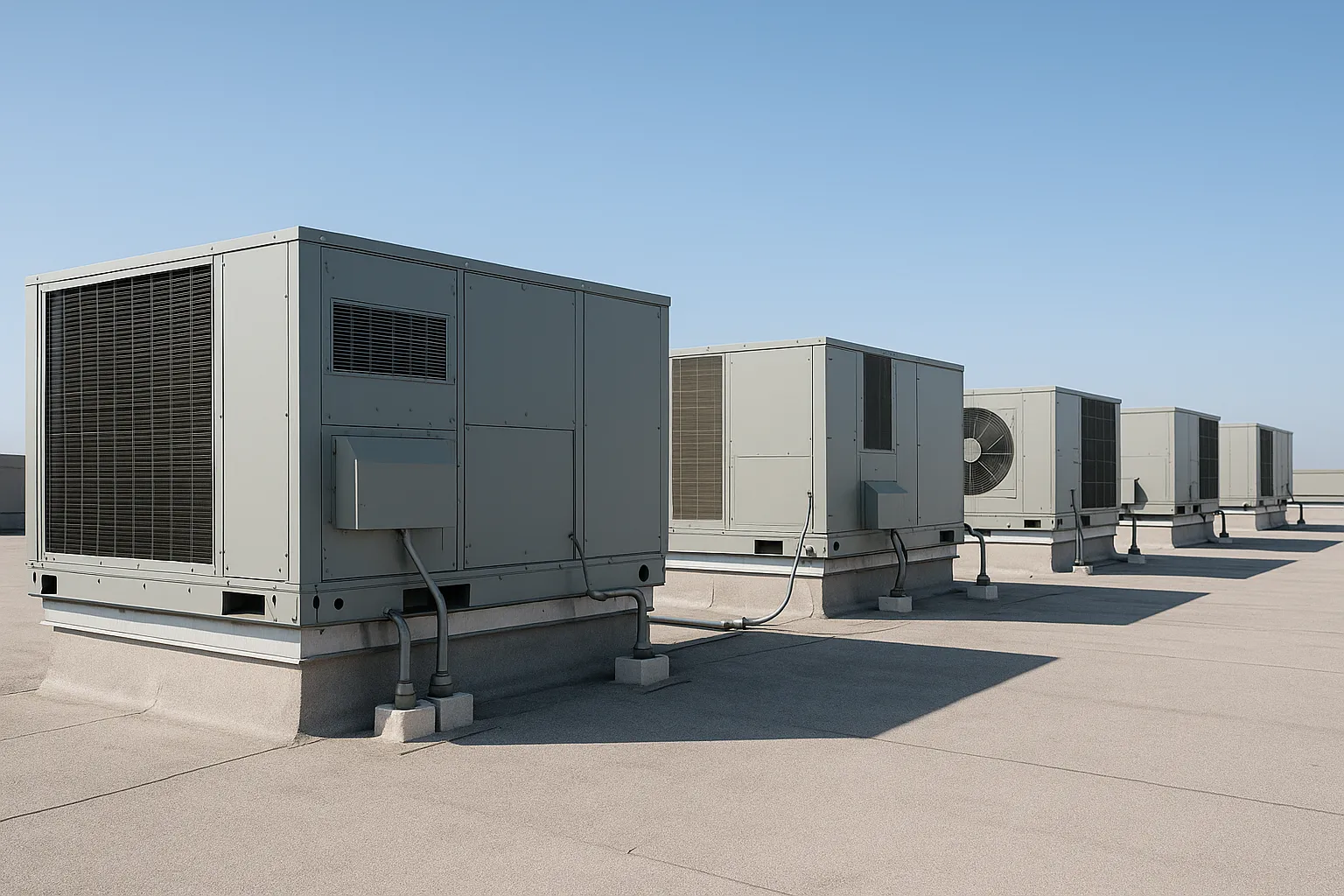
Typical RTUs in small to mid-size commercial buildings range from roughly 5–50 tons per unit, often in banks on the roof. Maintenance priorities include:[1][2][3][4]
- Quarterly filter checks and replacements based on occupancy and environment.
- Cleaning condenser coils and cabinet interiors to prevent debris buildup and heat-transfer loss.
- Inspecting economizers, dampers, and actuators to ensure proper ventilation and free cooling.
- Checking fan belts, bearings, and motors for noise, vibration, and wear.
- Verifying electrical connections, contactors, and relays for overheating or pitting.
- Confirming proper refrigerant charge and testing for leaks around service valves and coils.
For managers, under-maintained RTUs often show up as uneven temperatures between zones, rising energy intensity, and frequent after-hours service calls.
Chillers and central plants (50–500+ tons)
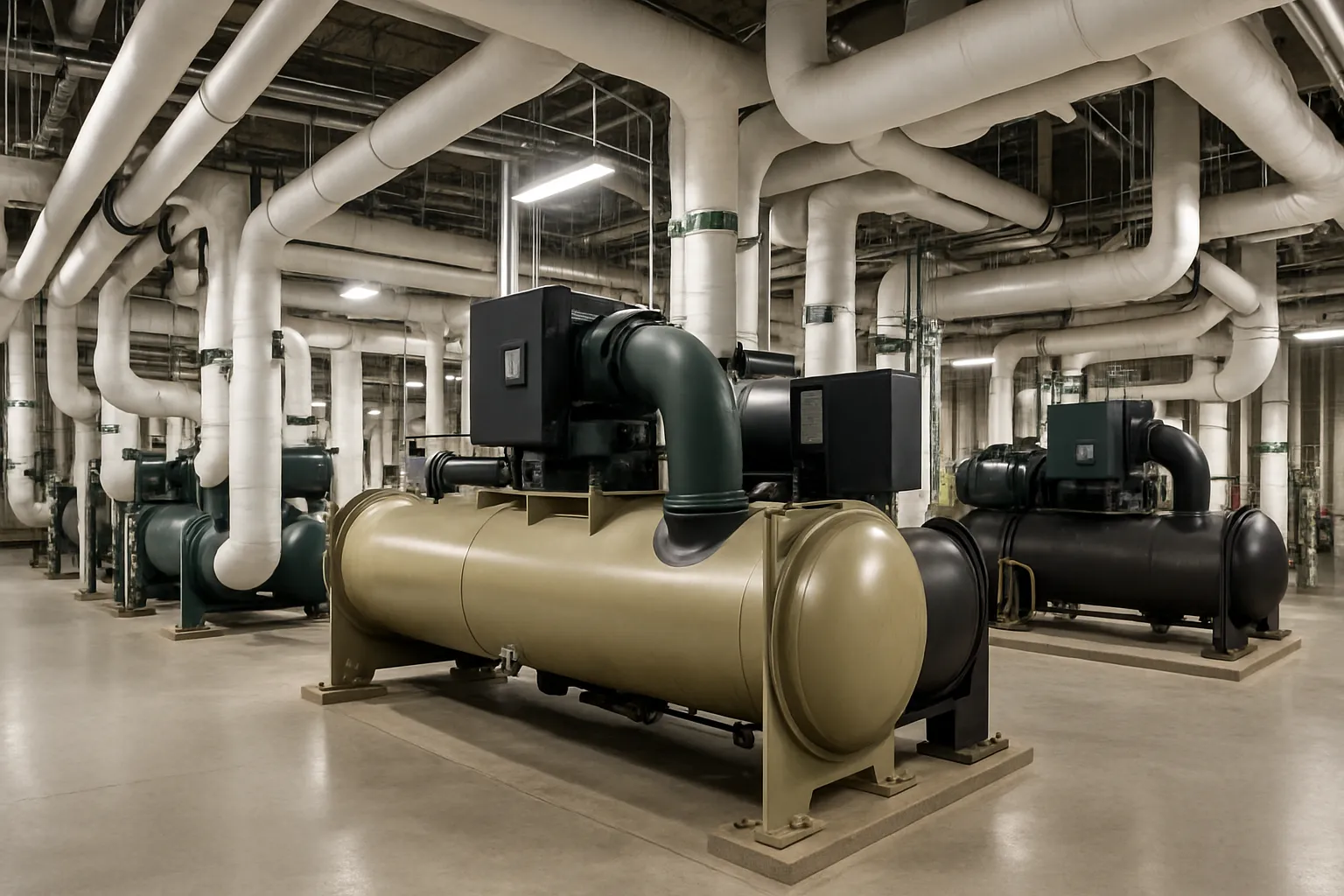
Central chilled-water plants serving campuses, high-rises, and hospitals frequently operate in the 50–500+ ton range. Authoritative checklists highlight the importance of more advanced tasks for large systems, such as oil analysis and in-depth electrical testing.[1][3][4]
- Oil and water quality checks: Oil analysis for large compressors can reveal internal wear or contamination early.[1] Water treatment is critical to protect tubes and towers.
- Tube and coil cleaning: Fouled heat-exchange surfaces reduce capacity and increase kW/ton. Annual or periodic cleaning is standard practice.[3][4]
- Vibration and electrical testing: Motor starters, variable-frequency drives (VFDs), and power quality (including phase and voltage monitors) should be inspected to protect large motors.[1][4]
- Controls calibration: Chiller sequencing, reset strategies, and BAS integration must be reviewed to maintain optimal part-load efficiency.[3]
Because downtime on a 300-ton chiller can impact thousands of occupants, many organizations schedule more frequent inspections during peak cooling months and use preventive maintenance contracts specific to central plants.
VRF/VRV systems in modern offices and healthcare
Variable refrigerant flow (VRF) systems offer high zoning flexibility but rely on long refrigerant piping networks and multiple indoor units. While detailed procedures are vendor-specific, standard commercial HVAC maintenance tasks still apply:[3][4][5]
- Regular cleaning of indoor unit filters and coils to maintain airflow and prevent comfort complaints.
- Inspection of outdoor modules for debris, damage, or restricted airflow.
- Verification of refrigerant pressures and temperatures within manufacturer ranges.
- Review of controls, setpoints, and communication alarms through the central controller or BAS.
VRF systems are often used in applications where tenant comfort and configurability are high priorities. Proactive commercial HVAC maintenance helps avoid hard-to-locate refrigerant issues that can disrupt multiple zones at once.
Seasonal commercial HVAC maintenance: timing and priorities
Industry sources consistently recommend at least two professional service visits per year: one before the cooling season and one before the heating season.[1][2][8] For property and facility managers, aligning these visits with lease cycles and peak-load periods can minimize tenant disruption.
Spring and summer: cooling readiness
Spring visits typically focus on cooling performance:[1][2][3][6]
- Clearing debris around outdoor units and on rooftops.
- Cleaning condenser coils and verifying condenser fan operation.
- Inspecting and flushing condensate drain lines and pans.
- Testing thermostats and cooling controls for proper operation.
- Checking refrigerant charge and looking for leaks.
- Confirming ventilation rates and indoor air quality settings in the BAS.
These steps reduce the risk of mid-summer failures, water leaks into tenant spaces, and energy waste from dirty heat-transfer surfaces.
Fall and winter: heating and safety
Fall maintenance focuses on heating safety and reliability:[2][3][6]
- Testing gas-fired equipment combustion and checking for leaks, where applicable.[3]
- Inspecting heat exchangers and flues for damage or corrosion.
- Verifying furnace or heating-coil operation and controls.
- Checking carbon monoxide levels around combustion appliances.[2][3]
- Reviewing freeze-protection strategies for coils and piping in cold climates.
From a risk perspective, heating-season commercial HVAC maintenance is tied directly to life safety, not just comfort, especially in healthcare and 24/7 facilities.
Cost, ROI, and how to communicate value to stakeholders
Commercial HVAC maintenance has a clear financial rationale. Preventive programs are consistently identified as a way to improve performance, save energy, and extend equipment life.[1][3][7] While exact savings depend on building type, system age, and energy prices, several value levers are straightforward to explain to owners and finance teams.
Energy and operating cost impacts
Dirty filters, fouled coils, incorrect refrigerant charge, and poor controls calibration all increase HVAC energy use.[1][3][4][7] By following structured maintenance schedules, many buildings reduce avoidable energy waste and smooth out demand peaks. For large 50–500+ ton systems, even modest percentage improvements can translate into significant annual savings.
Reliability, tenant experience, and risk reduction
Preventive commercial HVAC maintenance decreases the risk of unexpected failures and service disruptions.[1][3][5] For managers, this translates into fewer emergency calls, less revenue loss in retail or healthcare environments, and stronger tenant satisfaction scores. Documented maintenance also demonstrates due diligence when negotiating leases or responding to indoor air quality concerns.
Capital planning and asset life
Regular inspections help identify equipment that is nearing the end of its economic life, allowing for planned replacements instead of emergency change-outs. Centralizing maintenance records in a CMMS creates a data trail that supports life-cycle cost analysis and can inform decisions about upgrading to higher-efficiency equipment.[3][4][5]
When presenting budgets, managers can frame commercial HVAC maintenance as a controllable investment that reduces the probability of high-impact failures and energy waste, rather than as a discretionary expense.
Frequently Asked Questions
How does a commercial HVAC maintenance contract reduce total cost of ownership for 50–500+ ton systems?
Structured commercial HVAC maintenance contracts bundle inspections, cleaning, testing, and documentation into predictable costs. By keeping coils clean, refrigerant charge correct, and controls calibrated, they help improve efficiency and extend equipment life.[1][3][7] This reduces emergency repairs and allows owners to plan capital replacements for large 50–500+ ton systems.
What risks do property managers face if commercial HVAC maintenance is deferred?
Deferring commercial HVAC maintenance increases the likelihood of equipment failures, comfort complaints, and energy waste.[1][3][5] In heating applications, neglected systems can pose safety risks, including combustion or carbon monoxide problems.[2][3] For owners, this can lead to unplanned capital expenditures and strained tenant relationships.
How often should filters and coils be serviced in commercial buildings?
Industry guidance recommends inspecting filters at least monthly and cleaning or replacing them regularly, more often in dusty or high-occupancy spaces.[2][3][4] Coils are typically cleaned at least annually to maintain proper heat transfer and efficiency.[3][4] High-load facilities or polluted environments may justify more frequent service based on performance data.
What should facility managers track in a CMMS for commercial HVAC maintenance?
Facility managers should track asset details, scheduled tasks, work orders, technician notes, parts usage, and completion dates in a CMMS.[3][4] This supports compliance, budget justification, and life-cycle planning. Trend data from maintenance history helps identify problematic units, optimize service frequency, and inform decisions about equipment upgrades or replacements.
How can commercial HVAC maintenance improve indoor air quality for tenants?
Regular commercial HVAC maintenance supports indoor air quality by ensuring clean filters, properly functioning ventilation, and clean coils and drain pans.[3][4][6] Maintenance visits are an opportunity to verify outside-air rates, address moisture or drainage issues, and confirm controls settings, helping managers meet comfort expectations and IAQ commitments in leases.
Related Reading on My HVAC Tech
- June HVACR Price Increases: What Building Owners Need to Know
- A2L Refrigerant Regulations: Compliance Guide for Commercial Buildings
Find a Qualified Commercial HVAC Contractor
Need help acting on this? Browse vetted commercial HVAC contractors in your area, or explore commercial HVAC services like preventive maintenance, retrofits, and emergency repair. Are you a contractor? List your business on My HVAC Tech to reach property and facility managers actively searching for help.

