

Commercial HVAC outlook: Q1 sales growth, backlogs and what it means for facilities
Quick Answers for Property & Facility Managers
How should property and facility managers respond to Q1 commercial HVAC growth and backlogs?
Plan earlier and lock in capacity. Q1 reports from major OEMs show commercial HVAC demand and backlogs rising, supported by efficiency upgrades, data centers, and service work. For building owners, that means start design, approvals, and procurement sooner, and lean on multi‑vendor bids and service contracts to secure equipment and labor.
Do production hurdles mean I should delay or accelerate my next major HVAC project?
Ongoing production and supply constraints generally favor accelerating planning, not delaying it. Backlogs at major OEMs indicate that large equipment—rooftops, chillers, DOAS, heat pumps—may require longer lead times. Getting designs finalized and POs issued earlier helps protect schedules and tenant commitments.
What do Carrier, Lennox, and Trane’s Q1 results signal for my HVAC budgets?
Sales growth and strong order books at these manufacturers suggest a firm pricing environment and sustained demand. Property and facility managers should expect limited discounting on large tonnage equipment, prioritize energy‑efficiency projects with clear payback, and build contingencies into multi‑year capital and operating budgets.
Commercial HVAC Q1 momentum: why property managers should pay attention
Leading U.S. HVAC manufacturers — including Carrier, Lennox, and Trane — reported commercial sales growth and stronger backlogs in Q1, driven by energy-efficiency investments, data center expansion, and expanding service pipelines. At the same time, production and supply hurdles remain a constraint for the market.
For property managers, facility managers, and building owners, this is not just Wall Street news. It directly affects capital planning, tenant commitments, construction schedules, and operating risk across office, industrial, healthcare, education, hospitality, and mixed‑use portfolios.
This article unpacks what the latest results mean in practical terms and how you can adjust your strategy around equipment selection, procurement timing, and risk management — with reference to guidance from ASHRAE, DOE, and EPA where relevant.
What Q1 sales growth and backlogs reveal about commercial HVAC demand
Reported Q1 growth for Carrier, Lennox, and Trane reflects several converging forces in the commercial HVAC market:
- Efficiency-driven replacements: Tighter energy codes and higher federal efficiency standards are pushing owners to replace aging RTUs, chillers, boilers, and split systems with higher‑efficiency alternatives.
- Data center and mission‑critical demand: Rapid build‑out of data centers and edge facilities is pulling significant cooling capacity, especially high‑reliability, high‑redundancy systems.
- Service and retrofit pipelines: OEMs’ expanding service and retrofit businesses are securing multi‑year revenue streams from existing building stock.
Backlogs — the volume of orders booked but not yet fulfilled — are particularly important for property and facility managers. Elevated backlogs typically signal:
- Longer lead times for large equipment (e.g., 20–500 ton rooftop units, 100–2,000 ton chillers).
- Less pricing pressure, as OEMs with full factories are less likely to discount aggressively.
- Higher scheduling risk on projects tied to specific occupancy dates or lease-up targets.
For multi‑site portfolios, this means that getting ahead of the demand curve becomes a strategic advantage in itself.
Production hurdles and supply constraints: how they impact projects
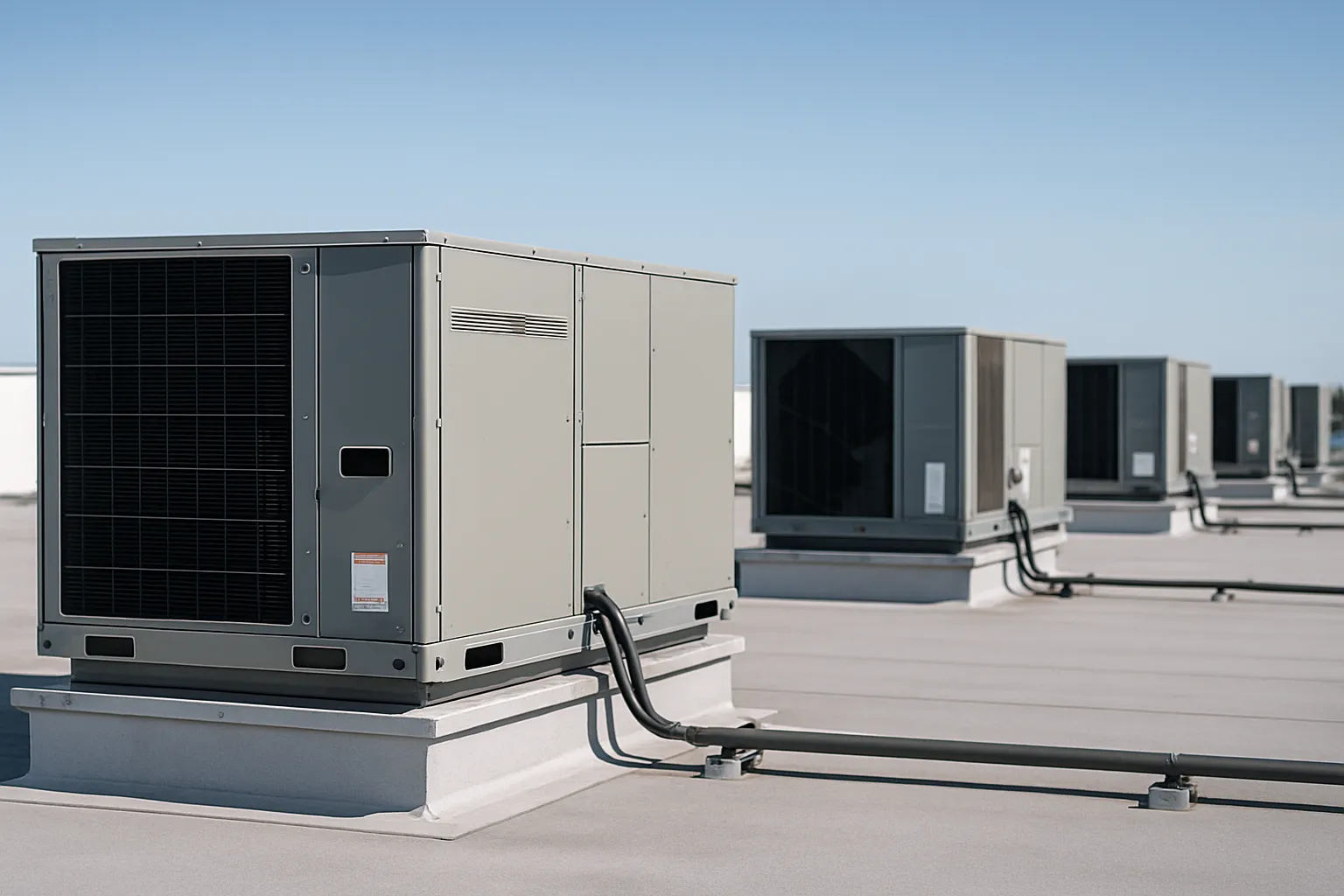
Despite growth, the article notes that production hurdles remain a factor in the commercial HVAC market. These can include component shortages, factory capacity limits, and logistics disruptions, all of which feed into extended lead times and delivery uncertainty.
From the owner and operator side, the practical implications can include:
- Lead-time volatility: Large custom and semi‑custom equipment — air‑cooled chillers, water‑cooled chillers, large RTUs, DOAS units, and central heat pump plants — may require many months from submittal approval to site delivery.
- Longer downtime windows: If replacement gear is delayed, temporary rentals or staged changeouts may be needed to maintain comfort and process loads.
- Procurement bottlenecks: Specifying a single manufacturer on critical path projects can increase the risk of schedule slippage if that OEM faces specific constraints.
ASHRAE guidance on resilience and continuity planning underscores the importance of maintaining HVAC functionality during disruptions and considering redundancy and contingency planning for critical facilities. For owners, that means aligning technical decisions with supply realities, not just design intent.
Energy-efficiency drivers: aligning with DOE and EPA priorities
Efficiency-related demand was a key growth driver for Q1 results. This aligns with broader regulatory and market trends:
- DOE equipment standards: The U.S. Department of Energy continues to ratchet up minimum efficiency standards for key commercial HVAC categories over time, affecting RTUs, chillers, heat pumps, and more.
- ASHRAE 90.1 and local energy codes: Many states and cities adopt or exceed ASHRAE 90.1 efficiency requirements, pushing higher equipment efficiencies and better control strategies in new construction and major renovations.
- EPA climate goals and refrigerant transition: The EPA’s programs under the AIM Act are driving the refrigerant transition and long‑term decarbonization, influencing equipment selection and lifecycle planning.
For property and facility managers, this environment creates both compliance pressure and financial opportunity:
- Upgrading from older, low‑efficiency units to high‑efficiency or heat pump‑based systems can deliver substantial kWh and therm savings, particularly in 20+ year old buildings.
- Projects that reduce utility costs and emissions often support corporate ESG goals and may qualify for incentives, though programs vary by region and must be verified locally.
- Modern controls and building automation (e.g., advanced RTU controls, demand‑controlled ventilation) can improve part‑load performance and indoor air quality.
Given strong OEM backlogs, efficiency projects that were once “nice to have” are increasingly becoming time‑sensitive if you want to secure equipment, contractors, and incentives within your planning horizon.
Data center and mission-critical loads: implications for portfolio risk
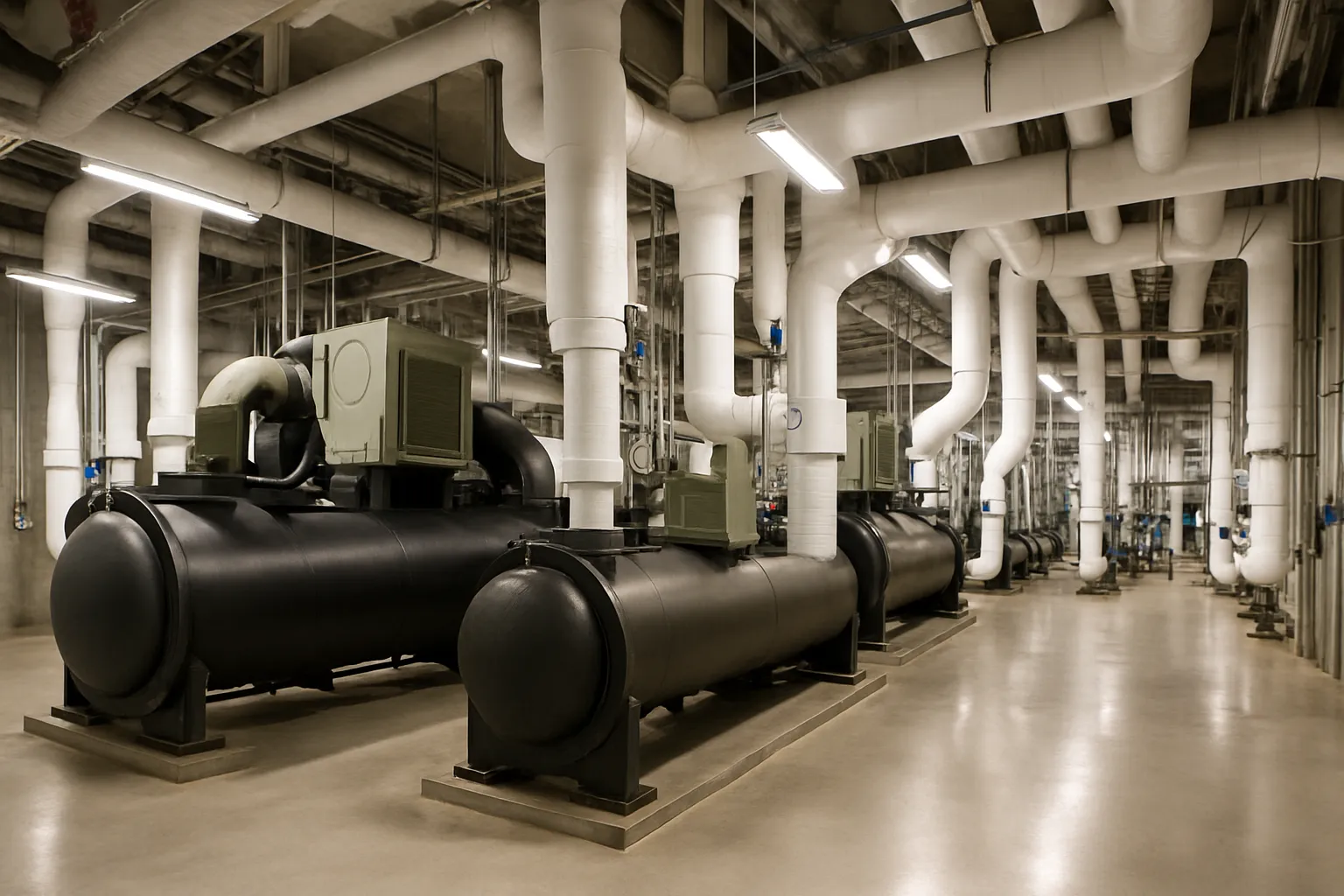
The Q1 strength tied to data centers and digital infrastructure deserves special attention. These facilities demand:
- Highly reliable cooling with redundancy (N+1 or greater), often involving chilled water systems, CRAH/CRAC units, and close‑coupled or in‑row cooling.
- Tight environmental control around temperature and humidity, sometimes with advanced economization strategies.
- High capacity per square foot, which can strain local power and utility infrastructure.
Even if you do not operate a data center, growth in this segment can still affect your assets by:
- Competing for the same large‑tonnage chillers, air handlers, and controls as hospitals, universities, and large office campuses.
- Driving OEMs and contractors to prioritize mission‑critical work, which can impact lead times for other building types.
- Influencing technology roadmaps, with more products optimized for high‑density, high‑reliability applications.
Facility managers responsible for labs, healthcare, financial trading floors, and other critical spaces should treat Q1 trends as a reminder to revisit redundancy, maintenance strategies, and capital plans around HVAC systems that support continuous operations.
Strategic actions for property and facility managers
Given the combination of strong demand, elevated backlogs, and production hurdles, there are several concrete steps building owners and operators can take now.
1. Start HVAC planning and procurement earlier
Instead of waiting until 6–9 months before a lease start or major renovation, consider:
- Launching HVAC design and equipment selection 12–18 months ahead for large projects or large‑tonnage equipment.
- Requesting firm lead times and alternates from multiple OEMs during early design, not just at bid time.
- Aligning internal approvals so purchase orders can be released as soon as designs and submittals are accepted.
This is especially important for projects involving 50–500 ton rooftop units, 100–2,000 ton chillers, central heat pump plants, or significant DOAS and energy recovery systems.
2. Build flexibility into specifications and standards
Owner standards that name a single manufacturer can create procurement risk when that OEM’s backlog spikes. To reduce exposure:
- Standardize on performance criteria (capacity, efficiency, sound, controls interoperability) rather than single‑brand exclusivity.
- Pre‑qualify multiple manufacturer options for key equipment classes: RTUs, chillers, VRF/VRV, boilers, DOAS, and fan coils.
- Coordinate with your consulting engineers so alternates are pre‑approved and can be substituted without re‑design.
This approach supports competitive bidding while allowing you to pivot if one supplier experiences production or logistics issues.
3. Leverage service contracts and condition-based planning
With OEMs highlighting growing service pipelines, owners should see service not just as a cost, but as a tool for risk and capital management:
- Structured preventive maintenance can extend useful life for existing 20–100 ton RTUs, split systems, and hydronic equipment, buying time when new equipment lead times are extended.
- Condition assessments and asset tagging support data‑driven capital planning, allowing you to prioritize replacements before failure.
- Performance‑based service contracts can tie vendor compensation to energy, reliability, or uptime benchmarks aligned with your business goals.
ASHRAE and industry best practice emphasize the value of regular maintenance to preserve efficiency and indoor air quality, which also supports tenant satisfaction and retention.
4. Integrate efficiency and compliance into capital plans
Rising demand for efficiency‑driven projects, combined with DOE and local code requirements, means that delaying upgrades can concentrate cost and risk in later years. Practical steps include:
- Developing a multi‑year upgrade roadmap for major HVAC assets, sequenced to align with expected code changes and refrigerant transitions.
- Screening projects for potential incentives, tax benefits, or utility programs, in coordination with your finance team and advisors.
- Bundling control upgrades, ventilation improvements, and equipment replacements where it improves ROI and reduces disruption.
Even without quoting specific numbers, it is common for well‑designed efficiency projects in commercial buildings to deliver meaningful operating cost reductions and comfort improvements, particularly when replacing end‑of‑life equipment.
Positioning your buildings amid a tightening HVAC supply landscape
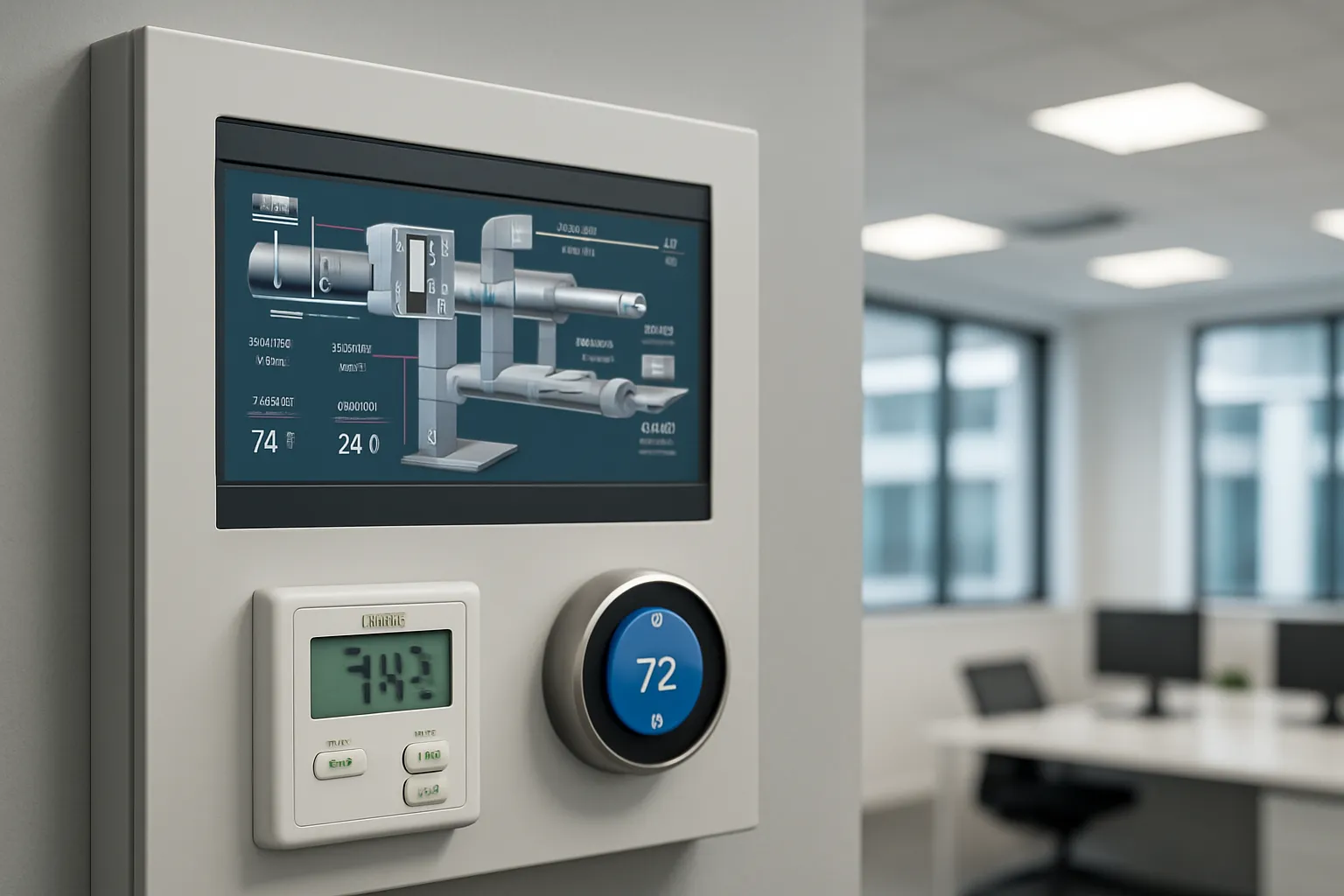
Carrier, Lennox, and Trane’s Q1 performance paints a picture of a healthy but capacity‑constrained commercial HVAC market. Demand is being fueled by energy‑efficiency mandates, data center growth, and expanding service relationships — while production hurdles continue to influence lead times and execution risk.
For property managers, facility managers, and building owners, the key takeaway is to treat HVAC planning as a strategic, time‑sensitive discipline. That means:
- Forecasting HVAC capital needs across the portfolio, rather than reacting project by project.
- Engaging engineering and contractor partners early with clear performance and schedule requirements.
- Maintaining flexibility in your standards and vendor lists so you can adapt to changing production and backlog conditions.
By proactively aligning capital plans, procurement strategies, and service partnerships with current OEM market dynamics, you put your buildings in a stronger position — not only to secure the equipment and capacity you need, but to turn efficiency and reliability into a competitive advantage in your markets.
Frequently Asked Questions
How will strong HVAC OEM backlogs affect commercial project timelines?
Elevated backlogs at major HVAC manufacturers typically mean longer lead times for large equipment and less flexibility on delivery dates. For owners, that increases schedule risk on tenant buildouts, capital projects, and major retrofits. Mitigation options include earlier design decisions, multi‑vendor alternates, and phasing plans that integrate temporary systems where needed.
What is the ROI case for upgrading commercial HVAC during a period of strong demand?
When OEMs report strong demand, pricing flexibility may be limited, but efficiency upgrades can still deliver compelling ROI through reduced utility costs, lower maintenance, and improved tenant retention. Evaluating lifecycle cost, available incentives, and corporate ESG goals helps justify projects even when upfront equipment prices are firm and lead times are extended.
How do DOE and ASHRAE standards influence HVAC equipment choices today?
DOE minimum efficiency standards and ASHRAE 90.1 provide the baseline for many state and local codes, effectively setting the floor for equipment performance. Owners must ensure new systems meet or exceed these requirements, and often choose higher‑efficiency options to reduce operating costs, manage carbon goals, and avoid premature obsolescence as standards tighten over time.
How should building owners manage HVAC risk in data center and mission-critical spaces?
Owners of data centers and critical facilities should plan for redundancy, robust maintenance, and longer procurement horizons. Strong demand from this sector means chillers, CRAH/CRAC units, and controls may face longer lead times. Designing for N+1 or better redundancy, stocking critical spares, and securing long‑term service agreements are key to managing operational and financial risk.
What procurement strategies reduce HVAC supply chain risk for multi-site portfolios?
Effective strategies include standardizing performance specs instead of single‑brand exclusivity, pre‑qualifying multiple OEMs per equipment category, and coordinating national or regional purchasing agreements. Pairing this with early forecasting of replacements and major projects allows you to lock in production slots and pricing, reducing schedule slippage and cost volatility over time.
Related Reading on My HVAC Tech
- Commercial HVAC Market Update: What Q1 Sales Growth Means for Facilities
- Commercial HVAC Maintenance: Practical Guide for Reliable Building Performance
Find a Qualified Commercial HVAC Contractor
Need help acting on this? Browse vetted commercial HVAC contractors in your area, or explore commercial HVAC services like preventive maintenance, retrofits, and emergency repair. Are you a contractor? List your business on My HVAC Tech to reach property and facility managers actively searching for help.
Sources
Originally sourced from Facilities Dive


