

Tube Boiler Recall: What Property and Facility Managers Need to Do Now
Quick Answers for Property & Facility Managers
What should a property or facility manager do first if their building may have a Tube boiler affected by the recall?
Start by identifying every Tube boiler on your properties using your asset inventory and past service records, then confirm model and serial numbers against the recall notice. Next, document where each unit serves critical loads (domestic hot water, space heat, process heat) and contact your mechanical contractor and insurer to align on safety, contingency heating, and budget impacts.
How does Tube’s shutdown and boiler recall affect operational risk and budgets for commercial buildings?
Tube’s recall and shutdown increase risk of unplanned outages, higher replacement costs, and longer lead times. Property and facility managers should prepare capital plans for accelerated boiler replacement, review service contracts, and prioritize critical buildings such as multifamily, healthcare, and hospitality where loss of heat or hot water creates safety, lease, and regulatory exposure.
Can buildings keep operating safely while an affected Tube boiler is still in service?
Whether a recalled boiler can stay online depends on the specific hazard described in the recall and guidance from the manufacturer, code officials, and your mechanical engineer. In many cases, interim operation may be allowed with enhanced monitoring, documentation, and contingency plans, but managers should not override lockout or safety recommendations to maintain occupancy or comfort.
Why Tube’s boiler recall matters for commercial buildings
A major boiler recall has forced Tube to abruptly shut down operations, impacting more than 67,000 units and disrupting contractors and customers across the commercial HVAC market. For property managers, facility teams, and building owners, the immediate issue is not just the recall itself, but how it affects heat, domestic hot water, risk, and budgets across portfolios.
Tube boilers are commonly used in applications where reliability is critical: multifamily domestic hot water, office and school heating, hospitality, light industrial and process loads, and institutional buildings. A large recall combined with a corporate shutdown creates three converging risks for owners:
- Potential safety or performance issues with existing boilers.
- Service and parts uncertainty if the manufacturer is no longer supporting the installed base.
- Capital disruption as replacement projects are pulled forward with limited notice.
Industry standards from bodies like ASHRAE emphasize reliable, safe, and efficient operation of boilers in commercial buildings, while agencies such as the U.S. DOE and EPA encourage higher-efficiency and lower-emission replacements in retrofit situations. In the context of Tube’s recall, those best practices become urgent action items rather than long-term goals.
Step 1: Build a complete inventory of Tube boilers across your portfolio
The most important first step is to know exactly where Tube boilers are installed and what they serve. Many commercial portfolios lack a complete, centralized HVAC equipment inventory, even though due diligence guidance for commercial real estate explicitly calls for a full list of HVAC assets, including age, condition, and capacity.[4]
For this event, property and facility managers should create or update an inventory with:
- Site and building: property name, address, and building identifier.
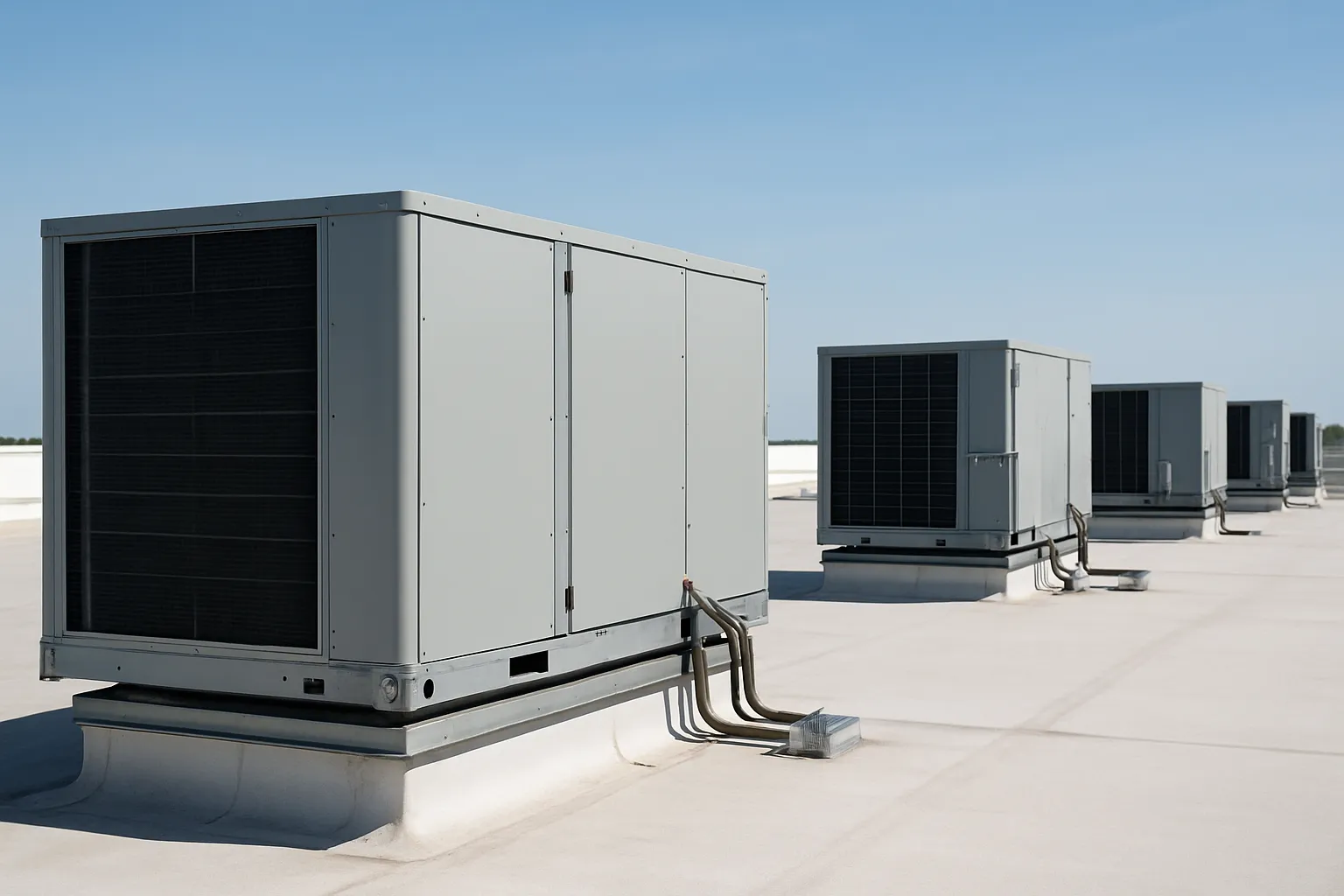
- Location: boiler room, rooftop plant, mechanical mezzanine, or dedicated equipment room.
- Make, model, and serial number: needed to confirm recall status.
- Fuel type: natural gas, propane, oil, or electric.
- Capacity: expressed in BTU/hr input or output; typical commercial boilers range from small condensing units under 500,000 BTU/hr up to multi-million BTU/hr plants serving large campuses.
- Served loads: space heating, domestic hot water, process hot water, or combination.
- Criticality: high (healthcare, senior living, multifamily domestic hot water, hospitality), medium (offices, schools), or low (storage, some industrial support spaces).
Pull data from prior capital plans, commissioning reports, and service records from your mechanical contractor. If you manage acquisitions or dispositions, incorporate HVAC equipment inventories developed during due diligence, as recommended in industry checklists.[4]
Step 2: Assess safety, compliance, and operational risk
Once you have a list of Tube boilers, the next priority is risk assessment. ASHRAE and building codes expect owners to maintain safe operation of mechanical equipment, which becomes more complicated when a manufacturer recall identifies a potential failure mode.
Key risk factors to evaluate with your engineer, contractor, and insurer include:
- Nature of the recall: Is the defect related to combustion, pressure containment, controls, venting, or another safety-critical component?
- Building use and occupancy: Healthcare, senior living, and education tend to have stricter expectations for redundancy and failure response than low-occupancy warehouse space.
- Dependence on the boiler: Domestic hot water for multifamily or hospitality is often more business-critical than space heating for a lightly occupied office during shoulder seasons.
- Redundancy: Buildings with N+1 or N+2 boiler arrays can take one unit offline while maintaining service, while single-boiler buildings are immediately exposed.
- Regulatory oversight: Some jurisdictions require registered boilers to meet inspection and service requirements; a recall may trigger additional scrutiny.
Coordinate with your risk management and legal teams to determine if any boilers should be taken offline immediately, operated with restrictions, or monitored more closely until a long-term corrective action is in place.
Step 3: Plan for service, parts, and replacement without Tube
Tube’s abrupt shutdown complicates traditional recall responses, which usually rely on the manufacturer for replacement parts, technical support, or full-unit swap-outs. Commercial HVAC guidance stresses the importance of understanding replacement costs and life expectancy of equipment to avoid surprise failures and budget shocks.[4]
In this case, owners should assume that OEM-backed solutions may be delayed or limited and proactively develop alternatives:
- Third-party service support: Engage mechanical contractors with experience in comparable boiler brands and sizes (for example, condensing hydronic boilers in the 500,000 BTU/hr to multi-million BTU/hr range) who can help evaluate safe interim operation.
- Parts cross-compatibility: Some components (pumps, valves, sensors, controls) may be standard or cross-referenceable; others may be proprietary. Your contractor can identify which can be replaced with widely available equivalents.
- Emergency heat or hot water: For critical facilities, consider rental boilers or temporary domestic hot water systems as a bridge during replacement projects.
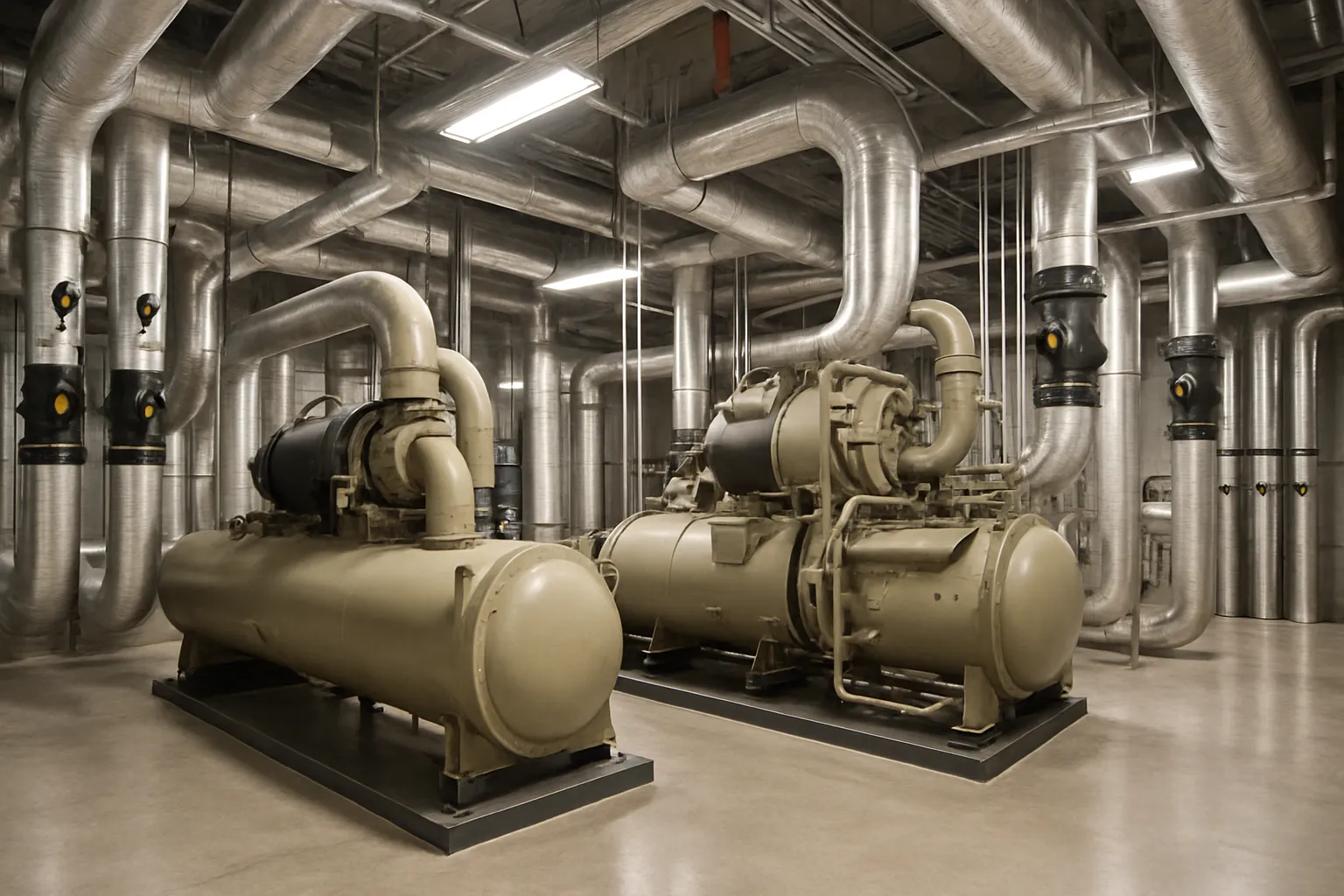
- Capital replacements: Begin scoping like-for-like or upgraded replacement boilers from other manufacturers, factoring in fuel type, flue design, turndown ratio, and control integration with your BAS.
The broader commercial HVAC market is already seeing pressure from regulatory changes and demand shifts.[1] A sudden increase in boiler replacement projects can further stress supply chains, so early planning is essential to secure acceptable lead times.
Step 4: Turn a forced recall into an efficiency and carbon upgrade
Although the Tube recall is disruptive, it may also create an opportunity to upgrade to higher-efficiency equipment aligned with DOE and EPA goals for commercial building decarbonization and energy savings.[8] Many older boilers operate at much lower efficiencies than modern condensing units, especially under part-load conditions common in commercial buildings.
When specifying replacements, facility and property managers should work with engineers to evaluate:
- Thermal efficiency: Condensing boilers can achieve efficiencies in the high 80% to low 90% range when return water temperatures are low enough to condense flue gases, compared to significantly lower seasonal efficiencies for non-condensing units.
- Right-sizing through load calculations: Commercial load calculations help ensure replacement boilers are properly sized, which improves comfort and lifespan.[4]
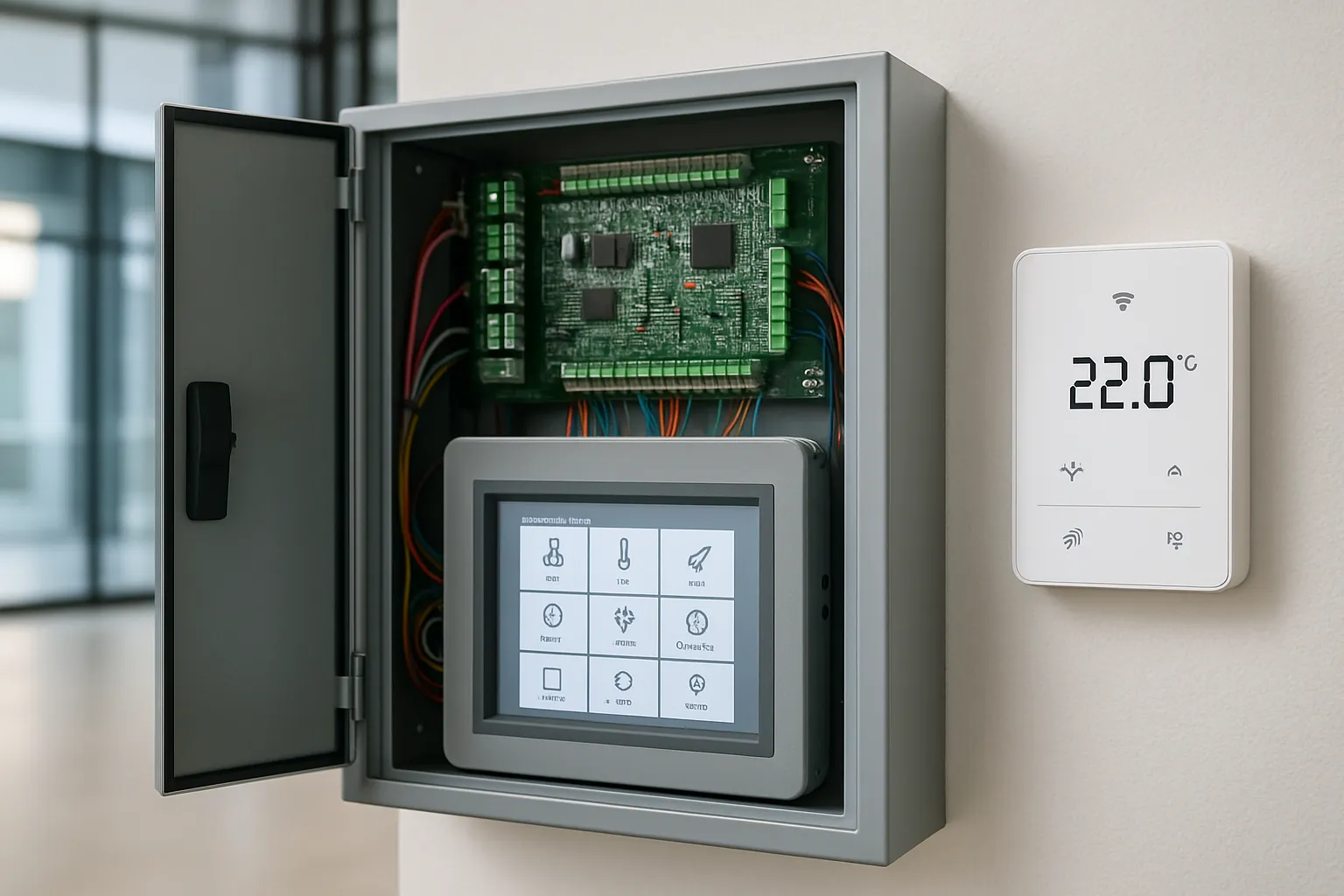
- Controls and integration: Advanced control sequences, including outdoor reset, lead/lag staging, and integration with building automation systems, can reduce energy use and smooth operation.
- Fuel and emissions: Some owners may consider high-efficiency electrified options or hybrid plants to align with corporate ESG targets or local carbon caps, where grid and rate structures support the business case.
DOE and EPA-backed programs, including those influenced by recent federal legislation, may offer incentives for high-efficiency boilers and related controls, particularly for retrofits in commercial and multifamily buildings. While specific rebates vary by utility and state, combining a necessary recall-driven replacement with available incentives can materially improve ROI.[1]
Step 5: Budgeting, insurance, and capital planning implications
Commercial HVAC replacement can be expensive, and industry sources note that major equipment like rooftop units can cost tens of thousands of dollars per unit, with similar order-of-magnitude costs for large commercial boilers depending on tonnage or BTU/hr capacity.[4] When 67,000+ boilers are implicated in a recall, even a modest portfolio exposure can become a material capital event.
Property and facility managers should:
- Quantify exposure: Estimate replacement costs per boiler, including design, permits, rigging, controls integration, and commissioning.
- Engage insurers: Determine whether any coverage applies to failure-related damage or expedited replacement caused by safety concerns.
- Reprioritize capital plans: Shift budgets from lower-priority projects to address Tube boiler replacements in critical buildings first.
- Coordinate with asset management: For institutional owners and REITs, communicate how recall-driven work will affect net operating income (NOI), leasing timelines, and ESG commitments.
For properties in acquisition or disposition, integrate recall status into HVAC due diligence, ensuring that buyers and sellers clearly allocate responsibility for replacement or remediation in purchase agreements.
Step 6: Communication with tenants, investors, and regulators
Finally, Tube’s shutdown and recall have a communication dimension. Building users care about heat, hot water, and safety, while investors and lenders focus on risk, resilience, and compliance.
Property and facility managers should develop a consistent message for:
- Tenants and occupants: Explain that a manufacturer recall has been issued, that you are conducting a risk-based assessment aligned with industry standards (including ASHRAE guidance), and that you have contingencies in place to maintain comfort and safety.
- Investors and lenders: Provide a portfolio-level summary of exposure, planned mitigations, and expected capital spend, demonstrating proactive risk management.
- Authorities having jurisdiction: Where required, coordinate with boiler inspectors or code officials to demonstrate compliance with recall directives and any additional inspection requirements.
Transparent communication helps manage expectations and reduces friction when temporary outages, construction activity, or capital reallocations become necessary.
Key takeaways for property and facility managers
Tube’s recall and shutdown are a reminder that even established boiler manufacturers can experience failures with system-wide impact. For building owners, the priority is not to wait for perfect information, but to execute disciplined asset management steps:
- Complete a portfolio-wide Tube boiler inventory with model, serial, and criticality.
- Conduct a risk assessment with engineers, contractors, and insurers aligned to ASHRAE and code expectations.
- Develop service and replacement strategies that do not rely solely on Tube for parts or support.
- Use the event to upgrade efficiency and controls, leveraging DOE/EPA-aligned incentives where available.
- Integrate costs and timelines into capital planning and due diligence for existing and future assets.
- Communicate proactively with tenants, investors, and regulators to manage risk perception.
Handled correctly, a disruptive recall like Tube’s can be converted from an emergency into a structured modernization program that improves safety, resilience, and operating performance across your portfolio.
Frequently Asked Questions
How should owners budget for replacing recalled Tube boilers in commercial buildings?
Owners should develop building-by-building cost ranges based on boiler capacity, rigging complexity, and required ancillary upgrades such as flues, pumps, and controls. Large commercial boiler projects can easily reach into the tens of thousands per unit, so capital reserves, contingency funds, and potential incentives for high-efficiency equipment should be evaluated together.
Does replacing recalled Tube boilers improve compliance with emerging energy and carbon regulations?
Yes, recall-driven replacements are a strategic opportunity to install higher-efficiency or lower-emission boilers that better align with ASHRAE standards, DOE efficiency benchmarks, and local carbon caps. This can reduce both operating costs and long-term regulatory risk, especially in jurisdictions tightening building performance standards.
What criteria should facility managers use when selecting a replacement boiler brand and model?
Key criteria include verified efficiency, reliability track record, availability of local service support, compatibility with existing hydronic and flue systems, and ease of integration with building automation. Facility managers should also weigh total lifecycle cost, not just first cost, including fuel use, maintenance, and expected service life under real operating conditions.
How can property managers minimize downtime when swapping out recalled Tube boilers?
To reduce downtime, managers should pre-plan phasing with their mechanical contractor, secure equipment orders early, and consider temporary rental boilers or modular hot water solutions for critical facilities. Coordinating shutdowns during off-peak occupancy and ensuring permits and inspections are scheduled in advance also reduces disruption to tenants and operations.
Should Tube’s recall change how HVAC risk is managed in future acquisitions and capital plans?
Yes. Future acquisitions should include a detailed HVAC inventory, review of manufacturer bulletins, and explicit discussion of recall or obsolescence risk. Capital plans should allocate funds for accelerated replacement of at-risk equipment and prioritize designs that use widely supported technologies, making portfolios less vulnerable to a single manufacturer’s exit or failure.
Related Reading on My HVAC Tech
- DOE Finalizes New Energy Efficiency Standards for Commercial Packaged HVAC Equipment
- Commercial Air Conditioning Maintenance: Practical Guide for Large Buildings
Find a Qualified Commercial HVAC Contractor
Need help acting on this? Browse vetted commercial HVAC contractors in your area, or explore commercial HVAC services like preventive maintenance, retrofits, and emergency repair. Are you a contractor? List your business on My HVAC Tech to reach property and facility managers actively searching for help.


