

DOE Finalizes New Energy Efficiency Standards for Commercial Packaged HVAC Equipment
Quick Answers for Property & Facility Managers
What does the DOE’s new commercial HVAC rule mean for building owners?
It means new commercial packaged HVAC equipment sold after the effective dates must meet tighter federal efficiency minimums. For building owners and facility managers, the practical impact is on specification, procurement timing, and lifecycle planning—not necessarily on replacing existing working equipment immediately.
Which commercial HVAC equipment is most likely affected?
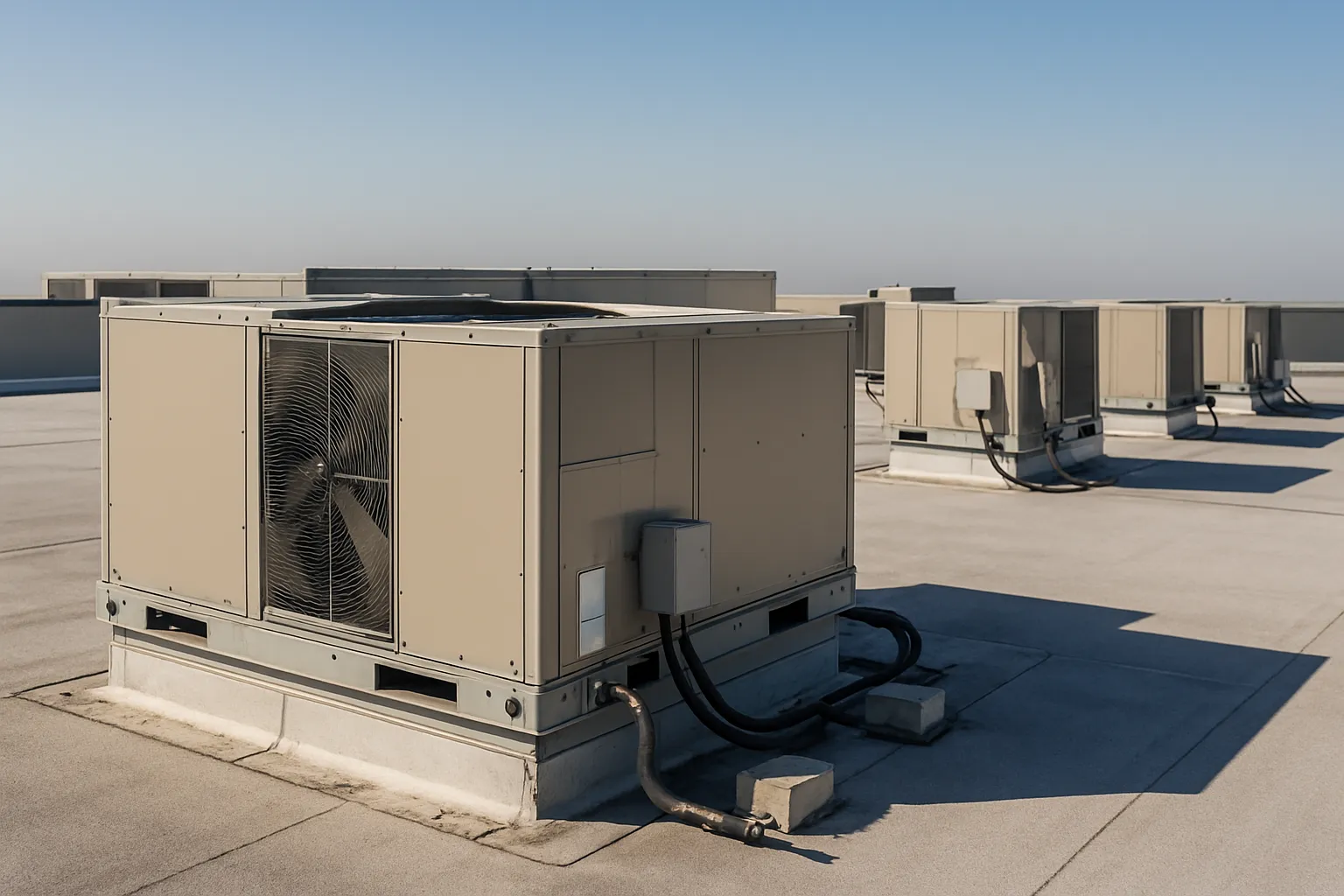
The rule affects certain new commercial packaged systems, including rooftop units and other packaged HVAC equipment covered by DOE standards. In practice, that means property teams should verify model compliance early during design, bid review, and replacement planning, especially for rooftop and packaged applications.
What DOE’s Final Commercial HVAC Standards Mean for Property Managers
The U.S. Department of Energy has finalized updated energy conservation standards for certain commercial packaged HVAC and water heating equipment, continuing the federal push toward higher efficiency and lower building emissions. For property managers, facility managers, and building owners, the key issue is not a technical one in isolation—it is a procurement and lifecycle issue that will affect equipment availability, specification language, and capital planning for new projects and replacements.
DOE appliance standards are federal requirements, and ICC notes that DOE efficiency rules for covered HVAC equipment preempt state and local code differences for those products. That matters because compliance is not optional when you are buying new equipment for a retrofit, tenant improvement, or planned replacement cycle.
Which Commercial Equipment Categories Are in Scope
DOE’s action applies to certain commercial packaged HVAC and water heating equipment, with particular relevance to new commercial rooftop units and other packaged systems referenced in the federal standards update. The broader DOE standards framework also covers commercial air conditioning and heat pump products, including light commercial categories and larger packaged applications already subject to federal minimums.
For building portfolios, the likely impact is strongest in:
- Rooftop units on offices, schools, retail centers, healthcare facilities, warehouses, and mixed-use buildings.
- Packaged air conditioners serving common areas, tenant spaces, and back-of-house zones.
- Commercial heat pumps used in electrification and replacement projects.
- Water heating equipment specified as part of a broader mechanical upgrade.
If your team manages properties with repeated rooftop replacements, this rule should be treated as a specification checkpoint in the same way you would review lead times, curb dimensions, structural loads, or electrical service changes.
Why the New Minimum Efficiency Levels Matter for Budgets and Specs
DOE standards are designed to raise the minimum efficiency floor for newly manufactured equipment. ICC and manufacturer guidance tied to prior DOE actions show that these federal standards have already changed how commercial HVAC equipment is rated and sold, including the move to revised test metrics such as SEER2, EER2, and HSPF2 for some product categories. The practical lesson for owners is that “same size, same tonnage” does not mean “same equipment availability” or “same performance assumptions” year over year.
For capital planning, that can affect:
- First cost for compliant replacement equipment.
- Design selection if a current basis-of-design model is no longer compliant or is being phased out.
- Project schedules if owners wait until a failure forces a replacement.
- Operating strategy as higher-efficiency equipment can alter energy modeling and incentive qualification.
ASHRAE standards and DOE federal minimums do different jobs: ASHRAE helps shape industry design practice and model codes, while DOE sets mandatory minimum efficiency levels for covered equipment. For owners, both matter because consultants, engineers, and contractors often use them together when building a compliant specification package.
What Facility Teams Should Do During the Phase-In Period
DOE said the updated standards will phase in over several years, which gives owners some planning runway—but not much if a portfolio has aging equipment or recurring rooftop failures. The best response is to update your procurement process now rather than waiting for a local replacement emergency.
- Audit your mechanical inventory by equipment type, age, tonnage, and replacement risk.
- Review current specs for rooftop units, packaged systems, and water heating equipment to confirm they still reference compliant minimums.
- Ask OEMs and reps which models remain in production, which are being revised, and whether lead times will change.
- Coordinate with engineers on load calculations, controls, and ventilation requirements so the new equipment is sized and selected correctly.
- Check incentive eligibility with utilities or rebate programs before final selection, since higher-efficiency equipment may qualify differently.
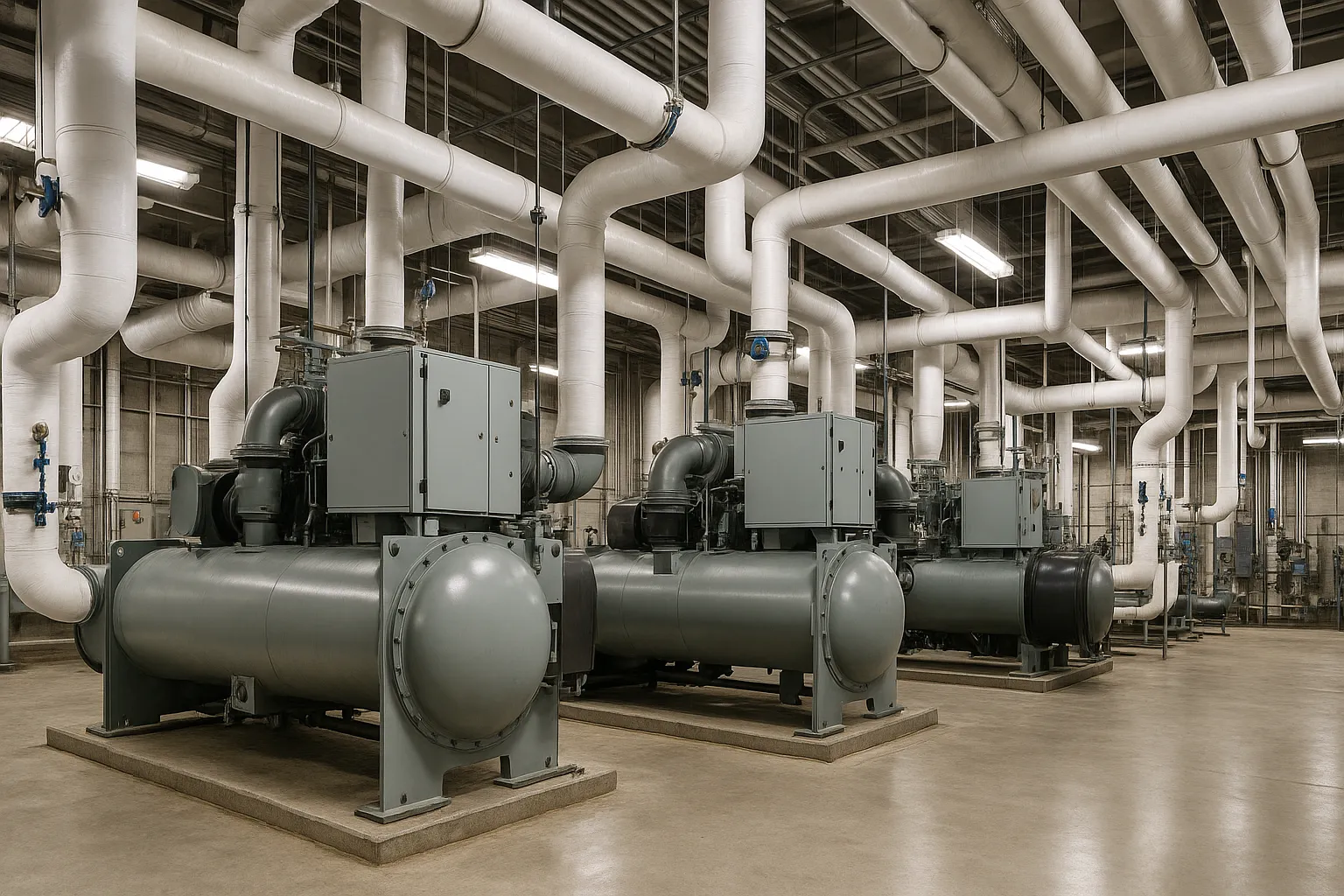
For properties with multiple buildings, this is the time to sequence replacements by risk and mission criticality. A 10-ton packaged unit on a small office building is a very different urgency than a 25-ton rooftop unit serving a retail anchor or a 50-ton system supporting a tenant with hard downtime penalties.
How to Reduce Compliance and Procurement Risk
The compliance risk is not usually with existing equipment already in service; it is with new equipment selection, purchase orders, and installed substitutions. The most common failure point is assuming an old basis-of-design model can still be ordered without checking current DOE-compliant alternatives.
To reduce risk, building owners and facility managers should require the following before approval:
- Model-specific compliance confirmation from the manufacturer or rep.
- Submittals that identify the exact equipment family, not just the nominal capacity.
- Clear documentation of test rating basis if the model moved to a new DOE metric or compliance category.
- Review of electrical and controls implications, especially for electrification-oriented replacements.
If a project is being designed around a long-lived rooftop replacement, it is also smart to confirm curb compatibility, disconnect location, economizer requirements, and service access while the specification is being updated. Efficiency compliance is only one piece of a successful replacement.
What This Means for Decarbonization and Long-Term Asset Planning
DOE’s final rule is part of a larger federal decarbonization trajectory that favors lower-energy mechanical systems across commercial buildings. For owners, that does not mean every facility must electrify immediately. It does mean that the market is moving toward equipment with higher minimum performance expectations, and that trend will influence lifecycle cost comparisons, portfolio carbon goals, and future capital reserves.
In practical terms, owners who plan ahead can use the new standards to their advantage by aligning replacements with energy audits, building automation upgrades, and envelope improvements. The most cost-effective project is often the one that solves the largest operational problem while also preserving future compliance flexibility.
For properties that rely on standard commercial rooftop units in the 3-ton to 25-ton range, or larger packaged systems used on multi-tenant and institutional buildings, the key action is to update the procurement playbook now. That way, when a unit fails, the team is choosing from compliant options instead of scrambling to retrofit an outdated spec.
Frequently Asked Questions
Will this DOE rule force me to replace existing HVAC equipment?
No. Federal equipment standards apply to new equipment sold and installed under the applicable compliance dates, not to every unit already operating in a building. The main risk for owners is during replacement planning, bid review, and product selection, when old specifications may no longer match compliant product lines.
How should a property manager prepare for rooftop unit replacements under the new standards?
Start by inventorying equipment age, capacity, and criticality, then update your standard specs to require DOE-compliant models. Ask for manufacturer submittals early, compare lead times, and coordinate with engineers on curb, electrical, and controls impacts before approving a purchase order.
Do higher DOE efficiency standards always mean higher project cost?
Not always, but they can change the cost structure. Compliant equipment may carry a different first cost, while energy savings, utility incentives, and lifecycle performance can offset part of that difference. For owners, the correct comparison is total cost of ownership, not just purchase price.
What should owners ask vendors about commercial packaged HVAC compliance?
Ask whether the exact model number is DOE-compliant for the project location and compliance date, whether it is a current production model, and whether any substitutions change efficiency ratings or controls requirements. Also confirm whether the selected unit affects rooftop dimensions, electrical service, or ventilation design.
How does this affect tenant improvement and retrofit projects?
Tenant improvement and retrofit projects are where compliance mistakes often happen, because teams reuse old basis-of-design specs. If the project includes new commercial packaged HVAC or water heating equipment, the design team should verify that every specified model still meets current federal minimums before bidding and release.
Related Reading on My HVAC Tech
- Commercial Air Conditioning Maintenance: Practical Guide for Large Buildings
- Trane AirFin Heat Exchanger: What It Means for Commercial HVAC Efficiency
Find a Qualified Commercial HVAC Contractor
Need help acting on this? Browse vetted commercial HVAC contractors in your area, or explore commercial HVAC services like preventive maintenance, retrofits, and emergency repair. Are you a contractor? List your business on My HVAC Tech to reach property and facility managers actively searching for help.


