

rtu hvac: Practical Commercial Rooftop Unit Tips for Property Managers
Quick Answers for Property & Facility Managers
What does rtu hvac mean in a commercial building?
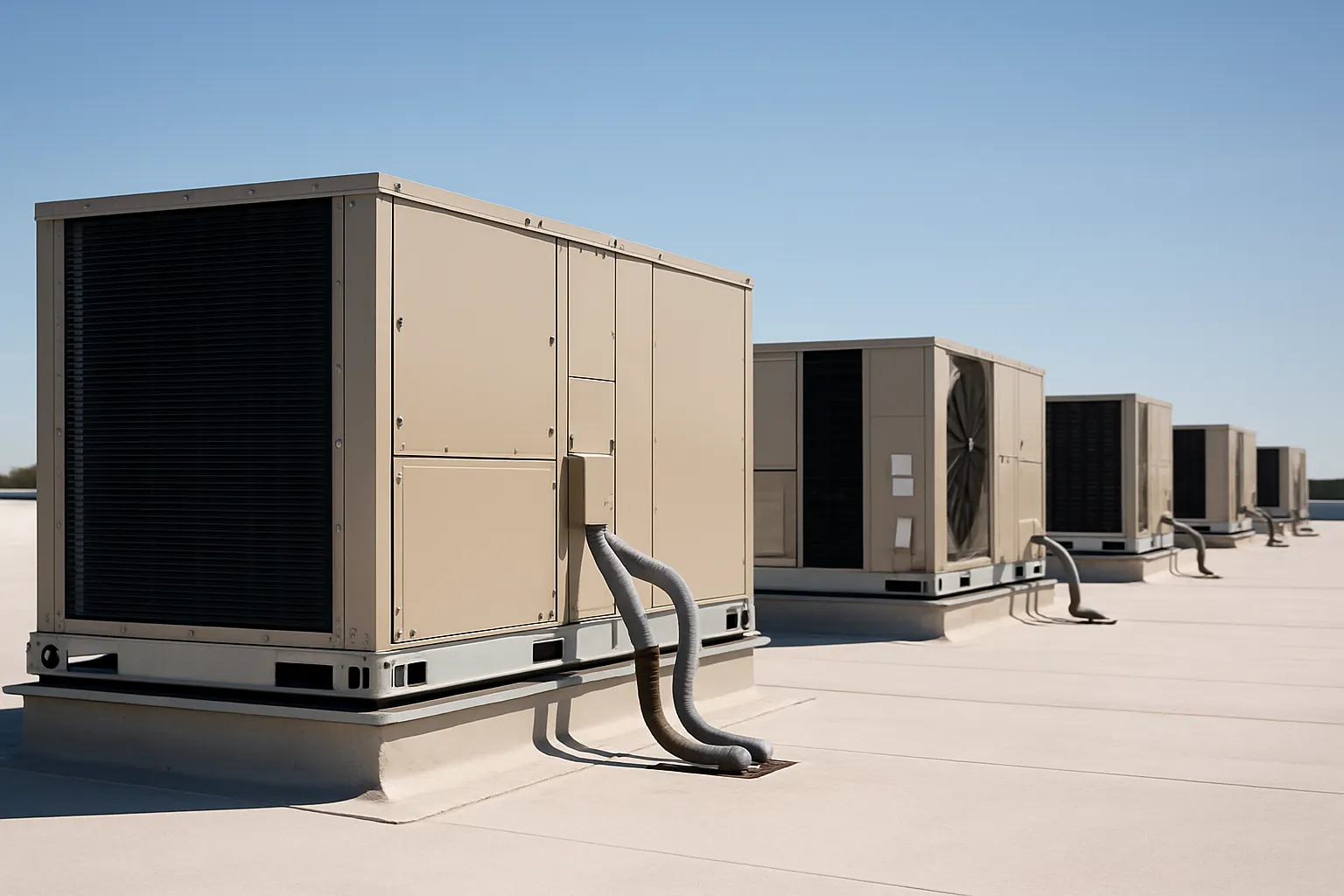
RTU HVAC means a rooftop unit: a self-contained commercial heating, cooling, and ventilation system installed on the roof and connected to ductwork. For property managers, facility managers, and building owners, it is often the fastest way to serve offices, retail, and light-industrial spaces without building a full central plant.[2][4]
How do I know when to repair or replace an RTU HVAC unit?
Use age, breakdown frequency, energy use, and comfort complaints to decide. If an RTU needs repeated compressor, fan, or economizer repairs, or if replacement will improve efficiency and reduce downtime, a full swap often makes more sense than continued patching.[2][4]
What rtu hvac means for commercial buildings
An rtu hvac system, or rooftop unit, is a self-contained commercial HVAC system installed on the roof and tied into the building’s ductwork.[2][4] For property managers, facility managers, and building owners, the main value is simplicity: one packaged unit can provide cooling, heating, and ventilation for a defined zone or tenant area.[1][2]
RTUs are common in offices, retail, warehouses, and other low- to mid-rise commercial buildings because they preserve interior floor space and can be replaced as a single package.[1][4] That convenience is also why they require disciplined access planning, preventive maintenance, and lifecycle budgeting.
How to choose between rtu hvac, chillers, and VRF
The right system depends on building size, tenant mix, operating hours, and how much zoning control you need. RTUs are often the practical choice for many smaller and mid-size commercial properties, while chillers and VRF systems become more attractive as the building becomes larger or the loads become more complex.
- RTU HVAC: Best for straightforward rooftop service, ducted distribution, and modular replacement.
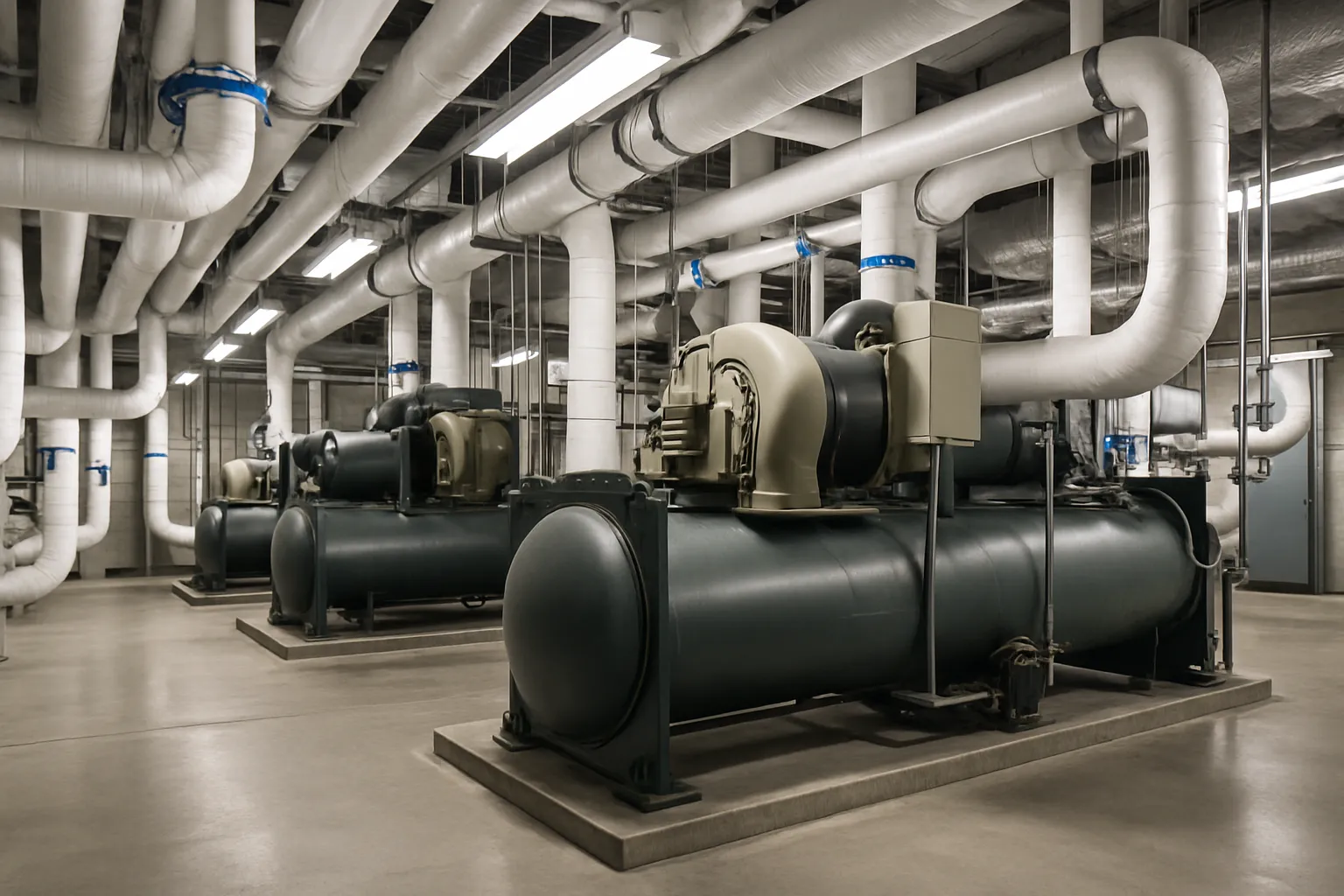
- Chillers: Better for larger buildings or campuses that need central plant control, redundancy, and higher-capacity chilled-water distribution.
- VRF: Useful when you need tight zone control, simultaneous heating and cooling in different areas, and flexible tenant fit-outs.
As a practical rule, many commercial RTU applications fall into the smaller-to-mid range, while larger properties may use multiple RTUs, chilled-water systems, or VRF combinations to cover loads and occupancy patterns. When the building starts to require complex zoning, long operating hours, or frequent tenant changes, it is time to compare RTU hvac against chilled-water or VRF options based on operating cost, downtime risk, and service access.
RTU HVAC sizing, tonnage ranges, and what they signal
For planning and replacement conversations, tonnage is a useful shorthand. In commercial portfolios, RTUs may be deployed in a wide range of sizes, from smaller units serving retail bays to large curb-mounted systems serving big-box or warehouse spaces. It is common to evaluate RTU projects in the 50- to 500+ ton decision range by summing multiple units, comparing plant options, or determining whether the building has outgrown packaged rooftop equipment.
Use tonnage as a decision tool, not just a nameplate number. A 50-ton RTU might be suitable for a single large tenant zone, while a property with several 100-ton-equivalent demands may be better served by multiple RTUs, a central chiller plant, or a VRF architecture depending on diversity and control needs. The key question for building owners is not only “How many tons?” but “How much load diversity, redundancy, and tenant control do we need?”
- Confirm actual peak loads before selecting a replacement.
- Check whether existing ducts, curbs, and roof structure can support the new unit.
- Compare staged modular replacement versus one large central system.
- Match equipment capacity to occupancy, ventilation, and humidity requirements.
RTU HVAC maintenance checklist for property teams
Preventive maintenance is where rtu hvac systems either become predictable assets or expensive emergencies. Because rooftop units are exposed to weather and debris, property teams should treat access, seals, and drainage as seriously as compressors and motors.
- Inspect filters and replace them on a defined schedule.
- Verify belts, bearings, motors, and fan operation.
- Check refrigerant charge and look for leaks.
- Test economizers, dampers, and outside-air intake operation.
- Clean coils and confirm condensate drainage.
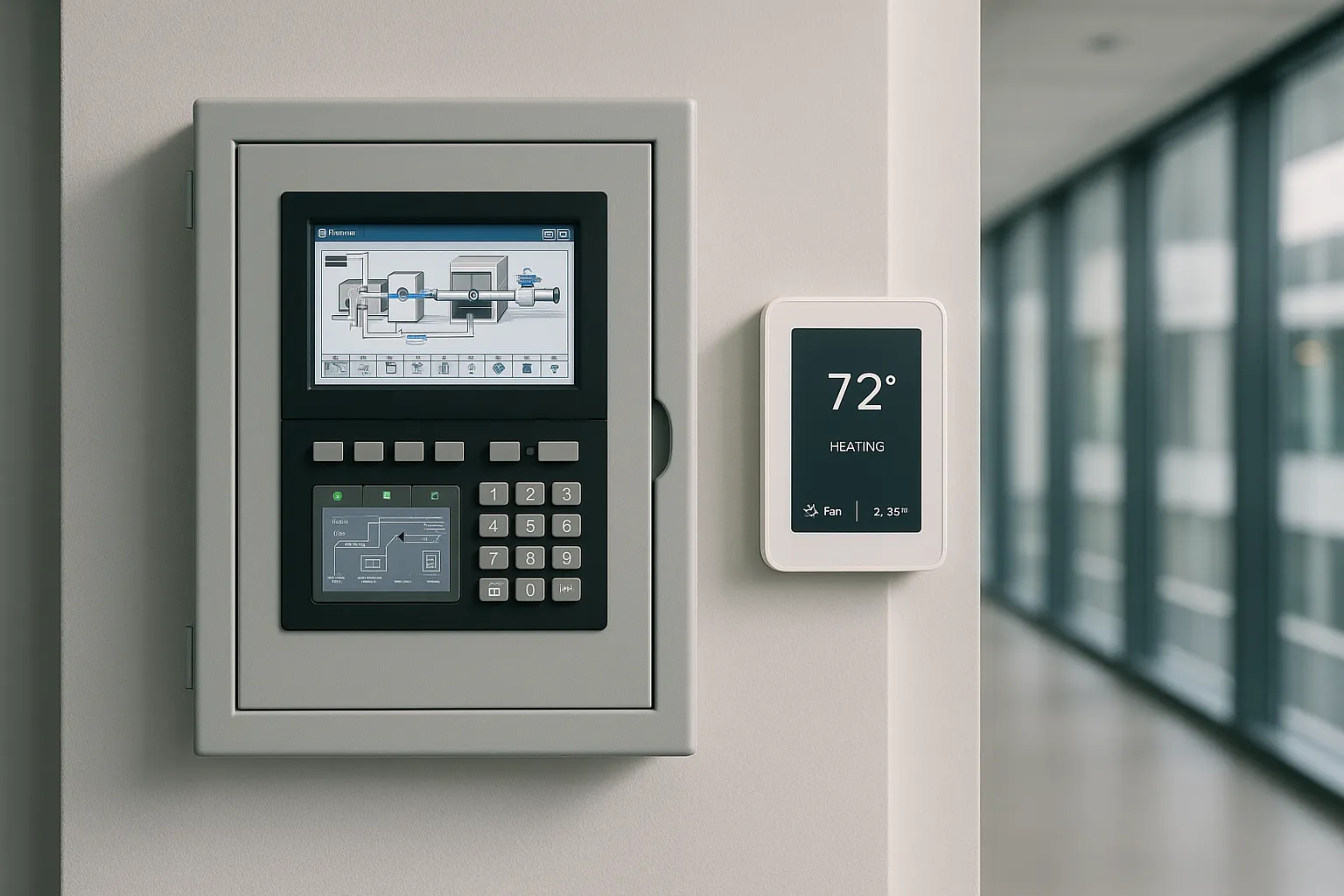
- Review controls, schedules, and setpoints for after-hours waste.
- Inspect roof curbs, penetrations, and weather seals for water intrusion.
- Document vibration, noise, hot/cold complaints, and runtime anomalies.
For facility managers, the objective is to reduce unplanned calls and catch small failures before they cascade into tenant disruptions. A clogged filter or failed economizer can quickly turn into comfort complaints, higher energy use, and premature compressor wear.
Step-by-step rtu hvac replacement and retrofit process
When an RTU reaches the end of its useful life, replacement should be handled like a capital project, not a service call. A disciplined process reduces downtime and protects the roof, ducts, and controls.
- Step 1: Audit the current system history, including repairs, energy bills, and tenant complaints.
- Step 2: Verify capacity needs with a current load assessment instead of copying the old nameplate.
- Step 3: Check roof structure, curb dimensions, electrical service, gas, condensate, and duct compatibility.
- Step 4: Compare like-for-like RTU replacement against upgrades such as high-efficiency units, VFDs, better economizers, or controls integration.
- Step 5: Plan crane access, outage windows, and tenant notifications early.
- Step 6: Commission the new system and verify airflow, temperature rise/drop, ventilation, and control sequences.
For occupied commercial properties, the most expensive mistake is often not the equipment price; it is poor planning around downtime, roof access, and tenant disruption. A well-managed RTU project protects operating continuity and improves the odds that the new system performs as expected from day one.
Cost and ROI context for rtu hvac decisions
Cost should be evaluated across purchase price, service labor, energy use, and lost productivity from tenant discomfort. RTU replacements can be attractive because they are modular and relatively fast to install compared with major central plant work, but the best ROI typically comes from reducing emergency repairs, improving controls, and matching capacity to real load.
For building owners, the ROI case often comes from a combination of factors: fewer truck rolls, fewer after-hours complaints, lower utility waste from failed dampers or bad schedules, and better tenant retention. If a property is already struggling with comfort issues, a targeted RTU hvac upgrade can deliver value faster than a broader mechanical overhaul because the scope is smaller and the operational benefit is easier to measure.
- Track repair frequency and compare it against replacement pricing.
- Estimate energy savings from better controls, economizers, and efficient motors.
- Factor in avoided downtime and tenant churn.
- Use utility bills and service logs to support capital approval.
Commercial building checklist for smarter rtu hvac decisions
Before approving repair or replacement, property managers and facility managers should use a simple decision checklist to reduce risk and improve budgeting accuracy.
- Do we know the age, tonnage, and service history of each RTU?
- Are there repeated failures in compressors, fans, controls, or dampers?
- Is the unit still meeting ventilation and comfort needs for current occupancy?
- Can the roof, curb, and electrical infrastructure support a replacement?
- Would a chiller or VRF system solve a recurring zoning or efficiency issue better?
- Have we planned for crane access, permitting, and commissioning?
Using this checklist helps owners move from reactive maintenance to lifecycle planning. That shift is especially important in portfolios with multiple RTUs, where deferred maintenance in one building can create a pattern of recurring cost across several assets.
Frequently Asked Questions
How much should a commercial property manager budget for rtu hvac lifecycle planning?
Budgeting should cover routine maintenance, emergency repairs, eventual replacement, crane access, and commissioning. The right number depends on tonnage, roof access, tenant sensitivity, and system age, but the most important practice is building a reserve based on real service history rather than waiting for a failure. That approach usually produces better ROI than deferring replacement until downtime becomes unavoidable.
When is a chiller better than an rtu hvac system?
A chiller is often better when the building is large, has multiple zones with different loads, or needs a central plant for redundancy and control. RTUs remain attractive for simpler rooftop distribution, but once a property requires complex load management, a chiller can improve scalability and long-term operational control.
When does VRF make sense instead of rtu hvac?
VRF makes sense when the building needs precise zone-level control, tenant flexibility, or simultaneous heating and cooling in different areas. For property managers, that can be valuable in office fit-outs, mixed-use floors, and hospitality-style occupancies. The tradeoff is that VRF requires careful design, controls integration, and service strategy.
What are the biggest operational risks with rtu hvac in commercial buildings?
The biggest risks are deferred maintenance, failed economizers, poor rooftop access, condensate problems, and mismatched controls. These issues can drive higher energy costs, comfort complaints, and premature equipment replacement. For building owners, the fix is consistent preventive maintenance, proper commissioning, and regular review of schedules and setpoints.
Related Reading on My HVAC Tech
- Commercial HVAC outlook: Q1 sales growth, backlogs and what it means for facilities
- Commercial HVAC Market Update: What Q1 Sales Growth Means for Facilities
Find a Qualified Commercial HVAC Contractor
Need help acting on this? Browse vetted commercial HVAC contractors in your area, or explore commercial HVAC services like preventive maintenance, retrofits, and emergency repair. Are you a contractor? List your business on My HVAC Tech to reach property and facility managers actively searching for help.


